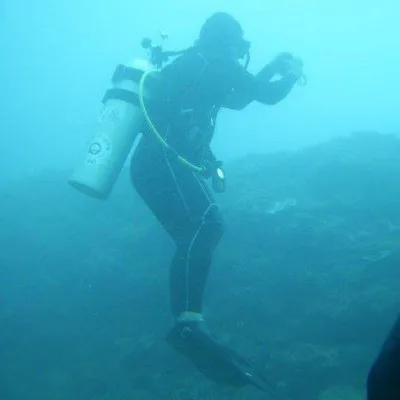
Pacific Cownose Ray (Rhinoptera steindachneri)
- Other names
- Golden Cownose Ray and Hawkray
- Max. Length
- 90 centimeters
- Length at 1st Maturity
- 48.8 centimeters
- Depth Range
- 0 – 30 meters (0 – 100 feet)
- Frequency
- Abundant in the Eastern Pacific Ocean
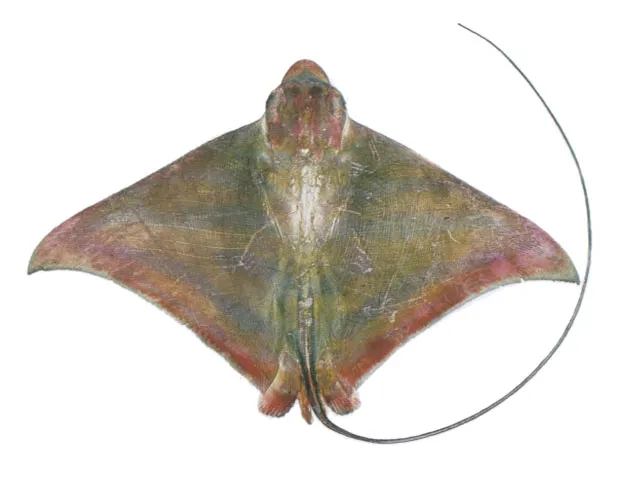
Just imagine a Munk’s Devil Ray or a Chilean Devil Ray that has a pronounced head instead of having a pair of horny projections, that’s your Pacific Cownose Ray. Aside from their obvious bulging head, you can easily identify a Pacific cownose ray through its diamond-shaped body that is usually colored brown to pale yellow.
They are usually seen in huge numbers and often form a close knit aggregation called school. A school of Pacific Cownose Ray thrives the open water environment but may sometime visit the ledges of a reef ecosystem. Your interaction with a Pacific Cownose Ray in Cocos island will usually occur towards the end of your dive where you will be drifted out to the open water areas. If you are lucky, you may also see them during your deep-sea submersible voyage where you will be amaze by their great number swimming in just direction while having a silhouette of the shallow surface.
Claspers will tell you the Gender
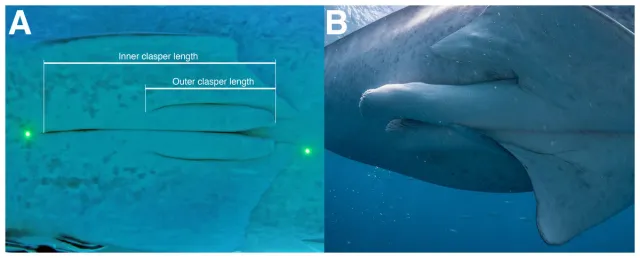
We are fortunate enough that by a single glance from its belly-side of a Pacific Cownose Ray, as well as other species of sharks and rays, we can determine the gender of the animal. Technically called as claspers, this male reproductive organ is highly visible on the underside near the tail of a Pacific Cownose Ray which looks like a pair of tubular cone.
This reproductive characteristic is true to all cartilaginous fish like sharks and rays. This implies that if you see a shark or ray that has claspers, then it is a male. If there is none, then it is a female.
A Nuisance Bottom Destroyer
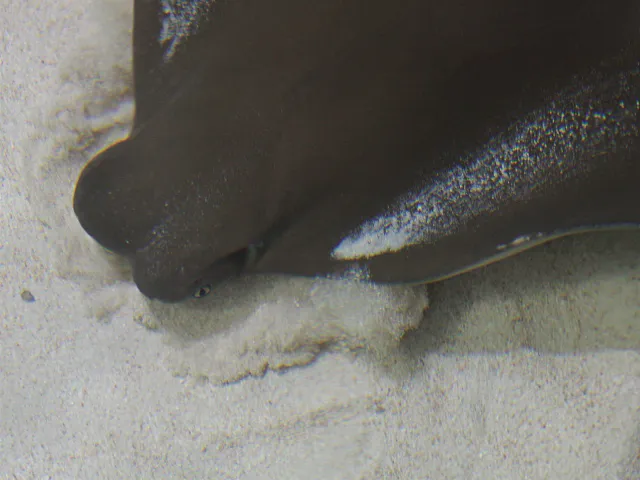
Have you ever wondered why they have a bulging head and a highly protruding snout instead of a fleshy horn? This body modification has something to do with feeding where they are considered as carnivorous as compared to the their close relative, the manta rays, which are filter feeders.
When a school of Pacific Cownose rays are in search for food, they will often swim towards the bottom of the reef. Preferring a sandy to muddy bottom rather than a rocky substrate, they scour the seafloor for benthic organisms like shells, crustaceans and mollusks using their bulging head and protruding snout. Just imagine the disturbance on the seafloor brought about by the simultaneous feeding of Pacific Cownose ray wherein, sometimes, they have been considered as a nuisance ocean dweller.
Reference:
Fishbase: www.fishbase.org
IUCN Redlist of Threatened Species: www.iucnredlist.org
Encyclopedia of Life: www.eol.org
Although it can be seen in the video, we are not promoting the use of speargun. Video courtesy from Francisco José Tébar Salas