Sharks are a distinct group of fish showing an evolutionary success where its origins can be traced back million of years ago. Their evolution has resulted them to become an efficient hunter of the deep where they sit on the top of the food chain. Equipped with a complex anatomical structure that aids them to become an apex predator, a shark’s body exhibits features that are not commonly found in most fish species.
Multiple Rows of Teeth
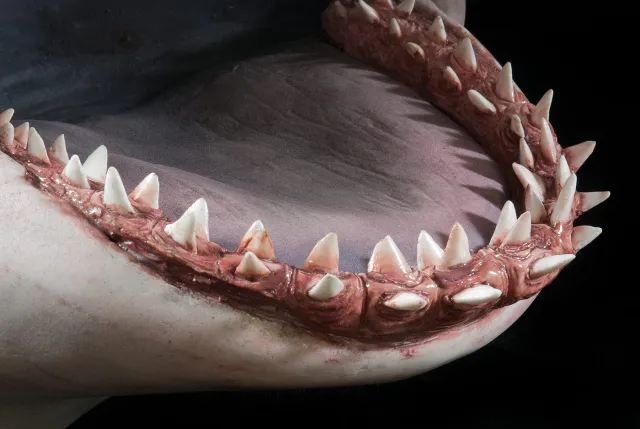
Their teeth are constantly replaced. Embedded in the gums rather in their jaws, sharks have multiple rows of teeth where the outermost row are the oldest batch and the innermost are the newest. The shape of their teeth depends on the species diet. If we talk about sharks specializing on mollusk, crustaceans or any shelled organism then you can expect their teeth to be dense and flat. If they are into hunting large prey, then expect a triangular and serrated teeth that are designed to add more grip and cutting power. If the species is a filter feeder (like whalesharks) then expect them to have a small and tiny dental system where it is deemed almost non-functional.
Cartilage Instead of Bones
The skeleton of sharks are totally different from your ordinary fish. It’s not they have an outer skeleton which is their former feature during their ancient years of existence.
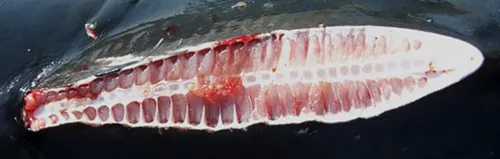
In general, there are 2 groups of fishes: the bony fish and the cartilaginous fish where sharks and rays belong. Instead of having bones, they have cartilages that is intertwined with connective tissues. This characteristic has allowed sharks to become more agile as cartilages are more flexible and weighs about 50% less than calcareous bones. On top of this, the discounted weight allows them to save energy, and instead, used the saved energy during feeding where you can see a massive release of energy during predation. And you know what, I just can’t imagine this dental system with humans: there would be much difference between burger lovers and vegan people.
Scales like Teeth
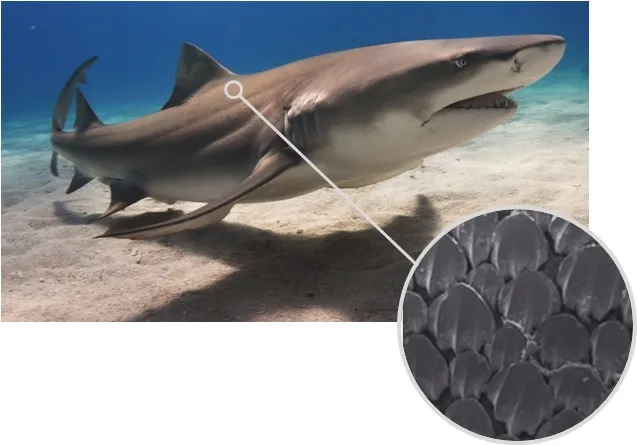
Yes, you read it right: scales like teeth. Sharks have a complex skin pore system that is made up of flexible collagenous fiber that are packed in a tight arrangement. This arrangement functions as an external armor where it is further attached with swimming muscles. This complex armor suit is made up of a material comparable to their teeth called dermal denticles which ultimately gives them the hydrodynamic advantage of swimming with less drag and turbulence during a high-speed chase.
The Different Species of Sharks in Cocos Island
There are several species of sharks in Cocos Island that comes in different forms, behavior and feeding habits where it occupies a specific part of the marine ecosystem of this offshore environment.
Here are the different species of sharks in Cocos Island:
• The Squaliform Sharks (Order Squaliformes)
Considered as an extreme group of cartilaginous fish, the squaliform sharks inhabits a wide range of habitat ranging from the warm waters of the shallow reefs up to the cold blackness of the abyss. Some of their characteristics includes five pairs of gill slits, two dorsal fins equipped with a spine along the edge, absence of an anal fin. But what is intriguing about squaliform sharks is that they exhibit a certain degree of bioluminescence where some species are known to glow in the dark.
Prickly Shark (Echinorhinus cookei)
- Max. Length
- 400 centimeters
- Length at 1st Maturity
- 182.3 centimeters
- Depth Range
- 10 – 1,100 meters (30 – 3,630 feet)
- Frequency
- Usually found in deep-sea environments
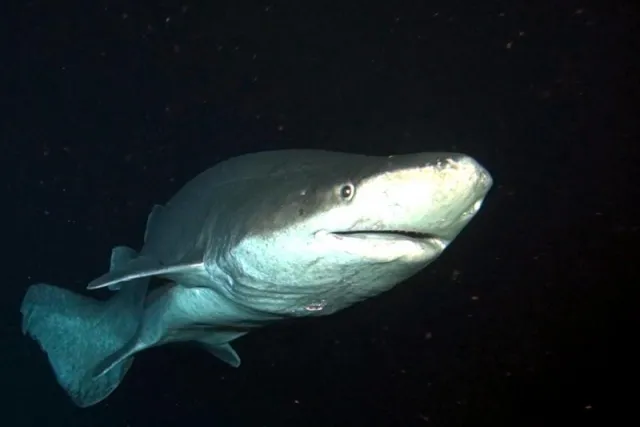
This large but sluggish shark that has a grey-colored body is one of the few shark species in Cocos Island where you can only see and interact with them using a submersible. You can find them usually at depths of 300 meters (1,000 feet) where darkness is a perpetual reality.
Once you see a prickly shark, focus your attention to the animal as it may become excited from the lights of your submersible and may turn into feeding frenzy mode where they can now easily see their prey which includes octopus, squids, large fish and other species of sharks.
In case you are interested in where their name is derived, you can read our related article about Prickly sharks to find out why.
• The Orectolobiform Sharks (Order Orectolobiformes)
Orectolobiform sharks is the only sub-group of sharks that has an attractive body pattern and color where you can either see lines, dots or bright body coloration. Also known as carpet sharks, they inhabit the warm waters of the world’s coral reef areas where you can easily them with the following characteristics: their mouth is completely in front of their eyes, they have 5 pairs of gill slits, they have anal fins and both dorsal fins doesn’t have any spines.
Whale Shark (Rhincodon typus)
- Max. Length
- 1,700 centimeters
- Weight
- 35 tonnes
- Depth Range
- 0 – 1928 meters (0 – 6362 feet)
- Frequency
- Threatened due to increasing demand for shark’s fin
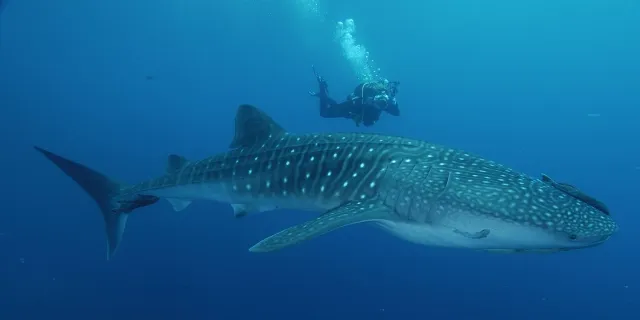
You should have known by now that whalesharks are the largest fish in the world that may grow over 17 meters in length and weighs about 35 tonnes. Despite being the largest, whalesharks are among the gentlest creature in the ocean where it poses no threats to humans.
But what is interesting about whalesharks is that they possess a characteristic similar to humans – they have fingerprints. The only difference is that human fingerprints are, of course, located in the fingers while a whalesharks fingerprint can be found in the skin of its body. For more information, you can read our related article about whalesharks.
• The Lamniform Sharks (Order Lamniformes)
Derived from the word Lamna which means Fish of Prey, Lamniform sharks is composed of some of the ocean’s notorious and aggressive species like the great white shark (but this particular species does not exist in Cocos Island). Also known as mackerel sharks, you can easily identify a member of this large group of sharks where it has 2 dorsal fins, one anal fin, five gill slits, the absence of a protective membrane in the eyelids making them prone to eyesight damage and a mouth the extends beyond their eyes.
Thresher Sharks (Alopias vulpinus)
- Max. Length
- 573 centimeters
- Length at 1st Maturity
- 207.3 centimeters
- Weight
- 348 kilograms
- Depth Range
- 1 – 650 meters (3 – 2,145 feet)
- Frequency
- Threatened due to increasing demand for shark’s fin
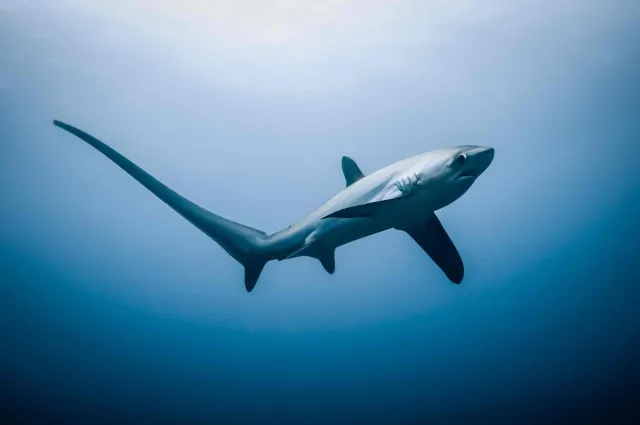
If there is one way to easily identify a thresher shark, it should be its caudal fin where it has a distinct elongation especially on the upper portion where it can exceed the entire length of its body. But if you want to see a thresher shark in Cocos Island, then you have to be an early riser as this species are known to ascend to shallow reefs early in the morning and descends back to the deep ocean once the sun rises up. For more information, you can read our article on Thresher sharks.
Tiger Shark (Galeocerdo cuvier)
- Max. Length
- 750 centimeters
- Length at 1st Maturity
- 176.5 centimeters
- Weight
- 800 kilograms
- Depth Range
- 0 – 800 meters (0 – 2,640 feet)
- Frequency
- Near threatened due to high demand in shark’s fin
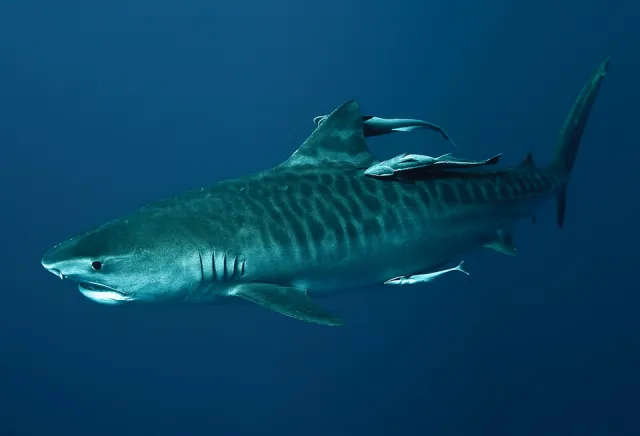
The stripes along the side of its body will tell you that this is a tiger shark. For easy identification, just remember this: if hammer-like heads are for hammerhead sharks, then tiger-like stripes are for tiger sharks.
But what is interesting with a tiger shark interaction in Cocos Island is that it will often start with a surprise where it usually comes from nowhere courtesy of its high mobility characteristics. At first, you will be amazed by its huge size and once you see the stripes, your heart will start pounding harder where you now know that you just have encountered one of the feared shark species. For more information, you can read our related article about tiger sharks.
• The Carcharhiniform Sharks (Order Carcharhiniformes)
This type of cartilaginous fish is composed of over 270 species worldwide and is considered the largest shark group. Also called as the Ground sharks, carcharhiniform sharks usually inhabits coral reef or areas near the seafloor. You can easily identify members of this group through its medium to large body with eyes that are almost perfectly round and is equipped with a protective membrane, they have 2 dorsal fins and a pair of pectoral fins that are just behind its 5 gill slits. This group is also unique to the rest of the shark family, especially in terms of reproduction, as it is known to be live-bearing instead of laying eggs.
Silvertip Sharks (Carcharhinus albimarginatus)
- Max. Length
- 300 centimeters
- Length at 1st Maturity
- 141.4 centimeters
- Weight
- 160 kilograms
- Depth Range
- 1 – 800 meters (3 – 2,640 feet)
- Frequency
- Near threatened due to high demand in shark’s fin
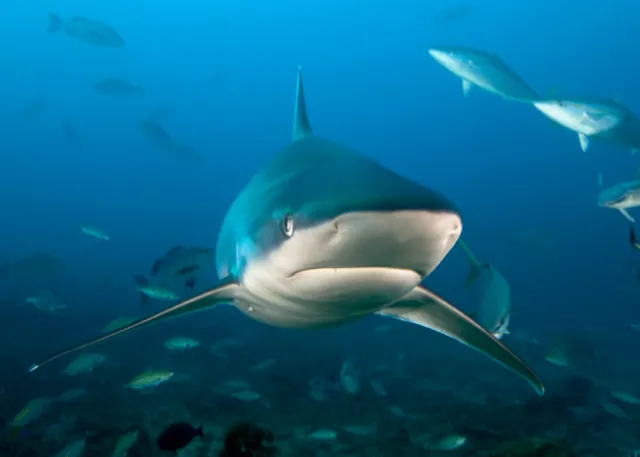
Silvertip sharks are one of the few species in Cocos Island where it is highly territorial and can be found particularly in a shallow reef off the northeast coast of Cocos Island called Silverado.
Speaking of competition, Silvertip sharks are more aggressive compared to other shark species where they can easily dominate a Galapagos and blacktip sharks. This competition is applicable especially when it comes to feeding where groupers, mackerels, small tunas and other fish are their favorite meal. For more information, you can read our related about silvertip sharks.
Silky Sharks (Carcharhinus falciformis)
- Max. Length
- 350 centimeters
- Length at 1st Maturity
- 146.3 centimeters
- Weight
- 346 kilograms
- Depth Range
- 0 – 4,000 meters (13,200 feet)
- Frequency
- Near threatened due to high demand in shark’s fin
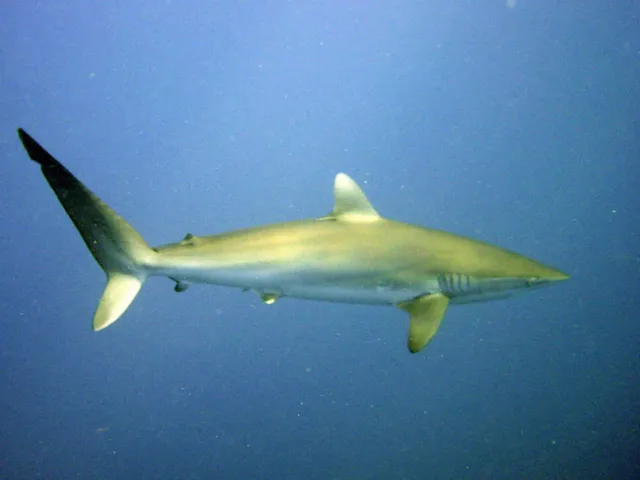
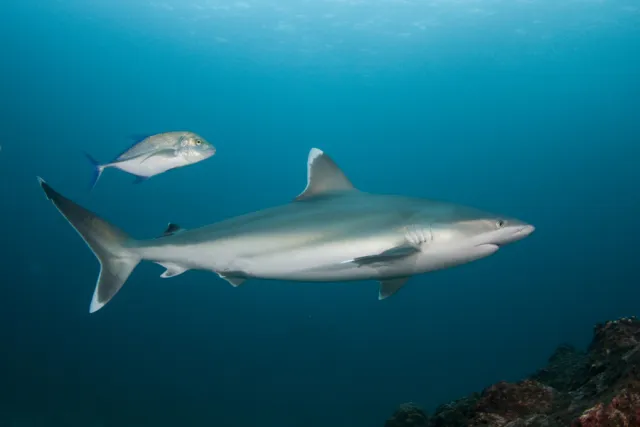
Silky sharks are highly migratory that they patrol the world’s oceanic waters. In Cocos Island, they can be occasional found in the top dive sites especially in Bajo Alcyone, Dirty Rock and Isla Manuelita. You can easily identify a silky shark through its long and slim body with a flat and rounded snout and large eyes. Despite having a small-sized jaw, it is equipped with serrated teeth that are oblique and pointed which has become their asset in hunting and predation. For more information, you can read our related article on silky sharks.
Galapagos Shark (Carcharhinus galapagensis)
- Max. Length
- 370 centimeters
- Length at 1st Maturity
- centimeters
- Max. Weight
- 195 kilograms
- Depth Range
- 30 – 180 meters (100 – 595 feet)
- Frequency
- Near threatened due to high demand in shark’s fin
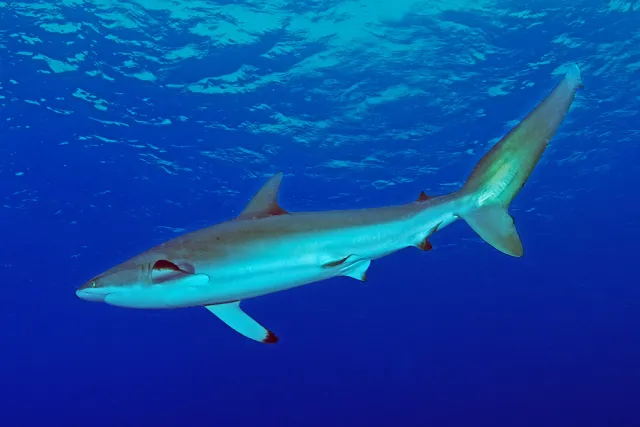
Found mostly in the Galapagos island of Ecuador and Cocos Island in Costa Rica, a Galapagos shark thrives in coral reefs or areas with rocky bottom where visibility is generally good. They are bottom feeders where they usually prey on reef fish, squids and octopus.
During your underwater adventure in Cocos Island, you can easily identify a Galapagos shark through its brown-grey body with a faint white stripe on the side and a full white undertone on the belly. They have a slender body and a snout that is wide and round in shape. For more information, you can read our related article on Galapagos sharks.
Blacktip Shark (Carcharhinus limabatus)
- Max. Length
- 275 centimeters
- Length at 1st Maturity
- 105.3 centimeters
- Max. Weight
- 123 kilograms
- Depth Range
- 0 – 100 meters (0 – 330 feet)
- Frequency
- Near threatened due to high demand in shark’s fin

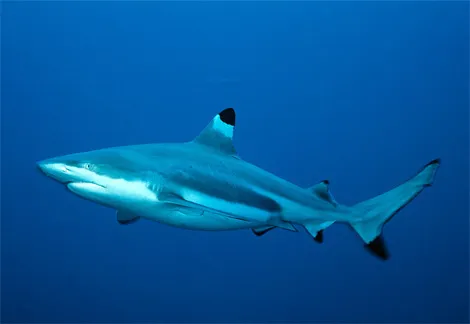
We think now is the right time to talk about fin colors. Here’s the trend: if silver are for silvertip sharks and white are for whitetip reef sharks, then black is definitely for blacktip sharks. What we are talking about is not the general color of the fins but rather the band of color located at the tip of a sharks dorsal, pectoral and anal fin.
Despite their reputation as a fearsome reef scavenger that can inflict fatal traumatogenic wound to its prey, they are being fished out of the reef where the remaining population is classified as near threatened to extinction. This is due to the high demand of its fins where it becomes the raw ingredients for the not so delicious shark fin soup. For more information, please read our related article about blacktip sharks.
Whitetip Reef Shark (Triaenodon obesus)
- Max. Length
- 213 centimeters
- Length at 1st Maturity
- 104.5 centimeters
- Weight
- 30 kilograms
- Depth Range
- 1 – 330 meters but usually at 8 – 40 meters
- Frequency
- Near threatened due to high demand in shark’s fin
This is the species in Cocos island where it shows to us what a shark is meant to be – a nocturnal animal. While you can easily see them resting during the day, they become active once the sun sets out and shift to feeding mode.
In fact, this behavior of them has become one of the famous dives in Cocos Island. What we are talking about is interacting with whitetip reef sharks during night time where this adventure is particularly coined “Night Diving with Whitetips in Manuelita”. The moment you plunge down the reef, you will be amazed to see that all the whitetip sharks, that once slept during the day, is now actively in search for food. And they become more agitated with the beam coming from your underwater torch. For more information, you can read our related article on whitetip reef sharks.
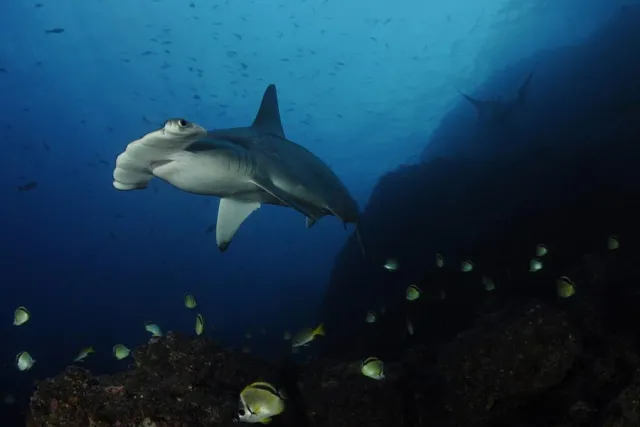
Scalloped Hammerhead Shark (Sphyrna lewini)
- Max. length
- 430 centimeters
- Ave. length
- 300 – 360 centimeters
- Size at 1st Maturity
- 225 centimeters
- Maximum weight
- 150 kilograms
- Depth range
- 0 – 1,000 meters
- Frequency
- Threatened due to shark finning, can be found in all the world’s tropical waters.
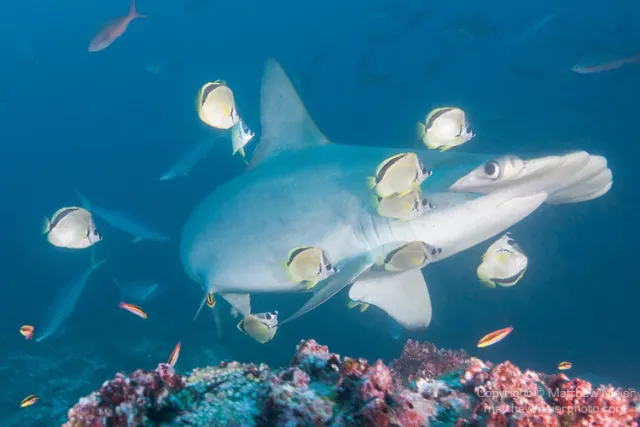
If the is one shark species that doesn’t really need a complicated identification guide, then I should say it’s the hammerhead shark. In fact, it has become the signature species of Cocos Island despite being a non-endemic species.
But instead of talking about their identification, we might as well focus your attention on why they choose to congregate Cocos Island in huge numbers. For more information, you can read our related article about hammerhead sharks.
Threatened for their Fins
Despite being feared for their aggressive behavior, sharks these days (regardless of species) are now being hunted. They are not being hunted as a sign of revenge for a human attack, but instead, they are harvested in huge quantity for their highly-priced fins.
Now, this is the worst part: they are finned out alive where their fin-less bodies are thrown back to the sea and drown to their death. The huge Asian market demand for sharks fin has caused the widespread unsustainable practice of shark finning where this illegal fishing practice has already intrude delicate marine ecosystem including marine parks like the ones in Cocos Island.
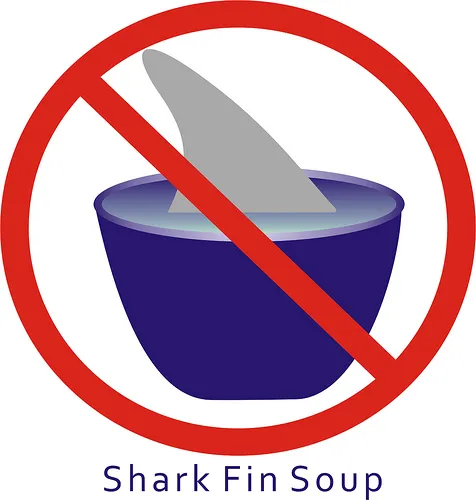
While we all know that shark’s fin is the raw ingredient for the excessively-priced shark’s fin soup, you may wonder how does it taste? Is it delicious? Is it nutritious? We will frankly tell you our answer: if not for the added spices and seasoning, IT IS BOTH NOT DELICIOUS AND NOT NUTRITIOUS as they claim. A cup of instant noodles taste way much better than a shark’s fin soup. In fact, you can even choose the favorite flavor for your instant noodles: beef, chicken or seafood, while you can’t do that with shark’s fin soup. As a diver and an environmental advocate, we know that you want to share your own efforts in the preservation of sharks. In this case, you just need to do one thing: support the sign in the side.
Reference
Fishbase: www.fishbase.org
IUCN Redlist of Threatened Species: www.iucnredlist.org
Encyclopedia of Life: www.eol.org