Mountain Mullet (Agonostomus monticola)
- Max. Length
- 36 centimeters
- Length at 1st Maturity
- 21.7 centimeters
- Depth Range
- 0 – 5 meters (0 – 15 feet)
- Frequency
- Abundant in shallow freshwater environments
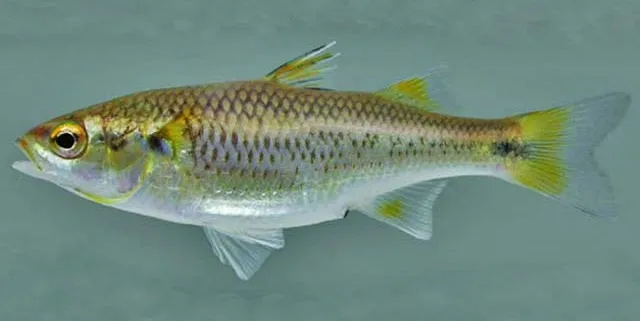
In case you can set foot on Cocos island, you can see that there are rivers teeming with freshwater inhabitants like the Mountain Mullet. You can easily identify this freshwater fish through its robust body that is usually colored olive with dark crisscross lines at the back portion. Their fins are colored yellow with a dark blotch near the base and this is more pronounced if the animal is still a juvenile. In between their eyes, you can see that there is a convex portion which is a prominent feature for all mullets in general. Their mouths have lips that are thick and a very strong dental system that is embedded deep in the jaws.
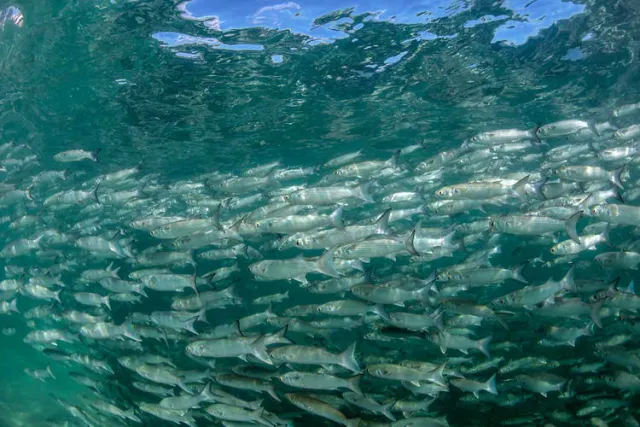
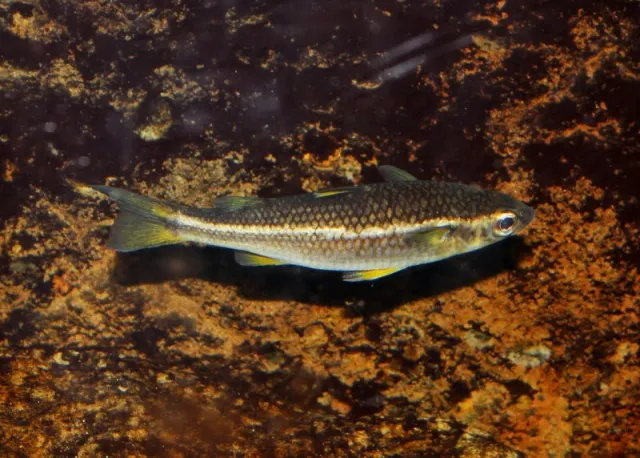
While walking along in one of Cocos island’s many rivers, you will notice that Mountain Mullets are thriving in the shallow surface. Usually they are seen facing upstream while swimming gently against the water current. They may form small groups where their loosely-aggregated population are found in fast-moving waters.
A Catadromous Fish
A Mountain Mullet is one of the few fish species in Cocos island that you can see in both marine and freshwater environments where the reason behind this dual existence has something to do with spawning. During adulthood, they spend most of their time upstream in freshwater lakes and rivers. But as the spawning season arrives, usually on the onset of rainy season, adults go downstream and out to the sea to lay their eggs. While this is the usual scenario for most areas, Cocos island exhibits a special case for Mountain Mullets as it rains most of the time in this offshore Costa Rican island. This is the reason why you see a lot of juvenile Mountain Mullets near the shores of Cocos island whole year round. Once it is strong enough, it will start its journey upstream where they spend their time until sexual maturity and repeats its cycle of life.
Eats all it can
Its not about the dining buffet that you are thinking where food intake is considered unlimited. What we are talking about is that a Mountain Mullet eats anything that can be found in the river. Although Cocos island is considered a pristine and Virgin Island, availability of food for Mountain Mullets is still a hunting process where they need to invest time and energy in exchange for a meal. The scarcity of food made them to consume almost everything like filamentous algae, aquatic insects, detritus, snails, any plant material, mollusks, and small fishes. In other words, it eats anything that moves along the water.
Reference
Fishbase: www.fishbase.org
IUCN Redlist of Threatened Species: www.iucnredlist.org
Encyclopedia of Life: www.eol.org
Video courtesy from VideotecaFaunaPR