Spotted Rose Snapper (Lutjanus guttatus)
- Max. Length
- 80 centimeters
- Length at 1st Maturity
- 42.5 centimeters
- Depth Range
- 10 – 60 meters (30 – 200 feet)
- Frequency
- Abundant in the reefs of the Eastern Pacific Ocean
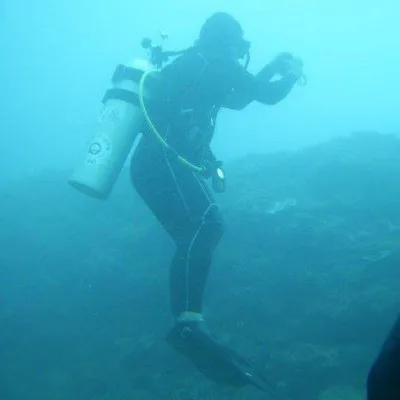
The spotted rose snapper is one of the species that is well been studied, not just in Cocos Island, but in other parts of the world. This is due to fact that it is a highly-priced species and that its aquaculture system has been perfected where farming companies have produced millions of fingerlings in the laboratory up to the harvesting of marketable size being grown in fish cages. But we guarantee you that the spotted rose snappers that you will see in Cocos Island are wild and not from the hatchery.
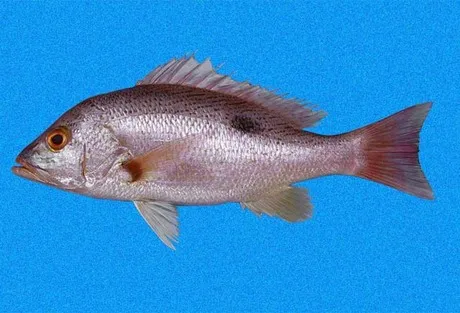
During your underwater adventures in Cocos Island, you can easily identify a spotted rose snapper through its pink to yellow colored body that has a silvery sheen with brown dotted stripes in a slanting position. If you can have a closer look, you will see that their nostrils are located far from its large mouth as compared to other species where it is located almost at the mid portion of its head. But what really stands out in identifying a spotted rose snapper is their distinct big black spot on its body. The black spot may also come in a smudge where it indicates that the animal is a full grown individual.
A Well Studied Fish
The study of spotted rose snapper in Costa Rica started way back in the 1980’s where its flourishing population in Cocos Island has inspired scientist to study its life history.
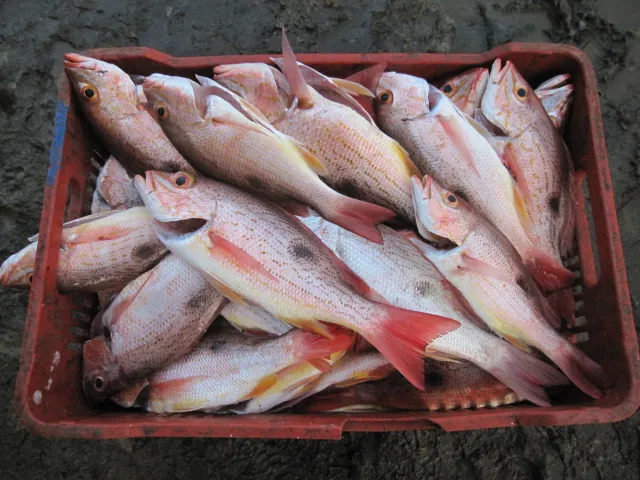
Upon determining that a spotted rose snapper can reproduce spontaneously making it suitable for fish farming, it soon became an instant hit for the aquaculture industry in mainland Costa Rica where fish farms were able to breed and grow this supposedly reef-associated species in captivity.
Today, spotted rose snapper is one of the most in-demand species in the United States where wholesale price can go as high as $20 per kilogram. But as far as Cocos Island is concerned and inspite the huge market demand for spotted rose snapper, this does not mean that you are given the permission to take, catch or harvest (regardless of quantity) as it is strictly forbidden in this offshore Costa Rican Island.
Reference
Fishbase: www.fishbase.org
IUCN Redlist of Threatened Species: www.iucnredlist.org
World Register of Marine Species: www.marinespecies.org
Video courtesy from Scuba Pura Vida