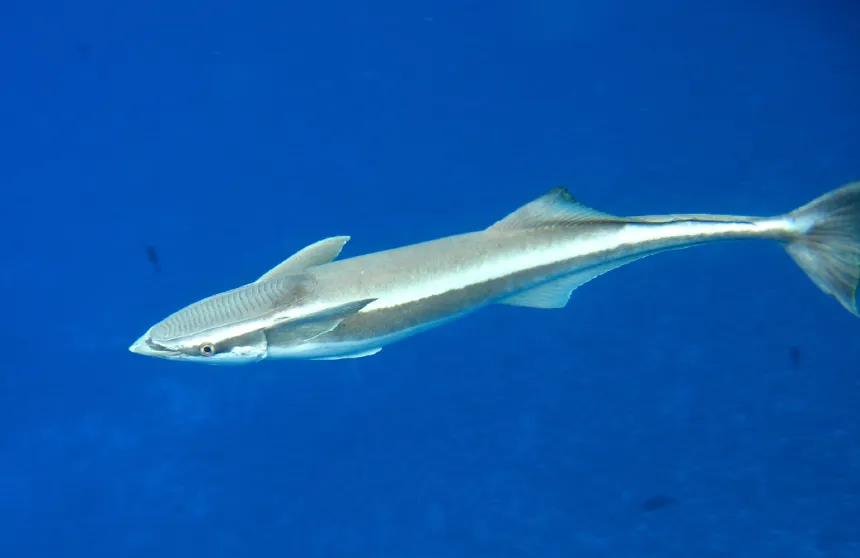
If you were able to see an elongated fish attached to the body of another large fish, whales, dolphins or sea turtles during your underwater adventures in Cocos island, then most probably you have seen a remora.
Also known as suckerfish, they thrive in Cocos Island using a host animal, usually of larger size. Their relationship between the host animal is a two-way affiliation called symbiosis where remoras get a free ride and take refuge while the host animal is being cleaned from parasites. Well, the concept is just like an on-board car wash station where sharks and other large species does not need an appointment at a cleaning station.
How do they Cling?
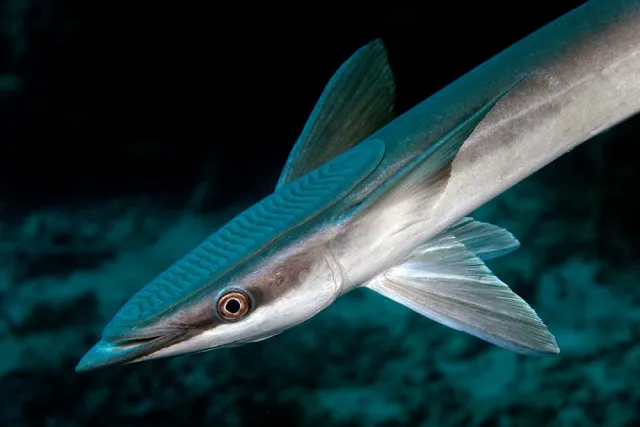
Do they bite? No. Instead, they use their sucker-like organs courtesy from the modification of their first dorsal fin where it is developed into a flat-oval disc on their head that has a narrow structure that opens and closes creating a suction effect which allows them to firmly hold to their host animal.
While remoras need to move around the body of its host, they can release the suction by swimming forward. When they need to lock in their position, all they must do is point their sucking organs near the host animal where suction will take place as it swims backward.
Despite being associated with a host animal, you can sometimes see them freely swimming alone in Cocos Island where they swim in a sinuous and curved motion.
The Different Species of Remora in Cocos Island
Live Sharksucker (Echeneis naucrates)
- Max. Length
- 110 centimeters
- Length at 1st Maturity
- 58.3 centimeters
- Depth Range
- 1 – 85 meters (3 – 280 feet)
- Frequency
- Abundant in warm waters of the Indo-Pacific Ocean
- Host Animal
- Sharks, manta rays and other ray species, large fish, sea turtle, whales and dolphins
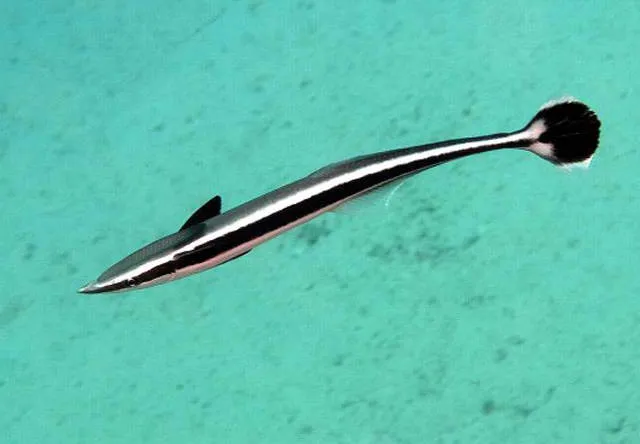
White Suckerfish (Remora albescens)
- Old Scientific Name
- Remorina albescens
- Max. Length
- 30 centimeters
- Length at 1st Maturity
- 18.5 centimeters
- Depth Range
- 1 – 200 meters (3 – 660 feet)
- Frequency
- Abundant in warm waters of the Indo-Pacific Ocean
- Host Animal
- Whalesharks, manta rays and other large pelagic fish
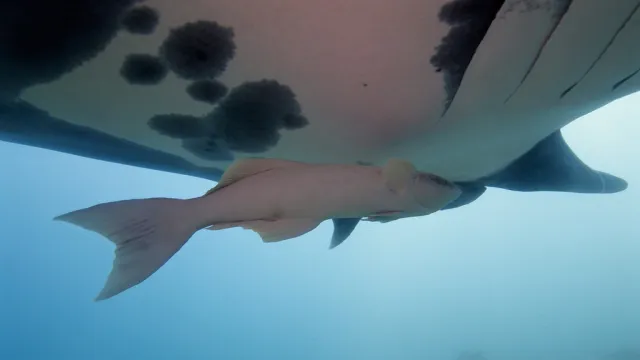
This is the species of remora that you will often see clinging to a whaleshark or manta rays in Cocos Island. Aside from their host, you can easily identify a white suckerfish through their pale grey to white body color where they often cling to the gill chambers of their host. If you happen to end your dive in an open water environment and may happen to see a marlin or billfish, take a closer look as they are also known to cling on these large pelagic fish.
Whalesucker (Remora australis)
- Max. Length
- 76 centimeters
- Length at 1st Maturity
- 42 centimeters
- Depth Range
- 1 – 50 meters (3 – 165 feet)
- Frequency
- Abundant in warm waters of the Indo-Pacific Ocean
- Host Animal
- Exclusive to whales and dolphins
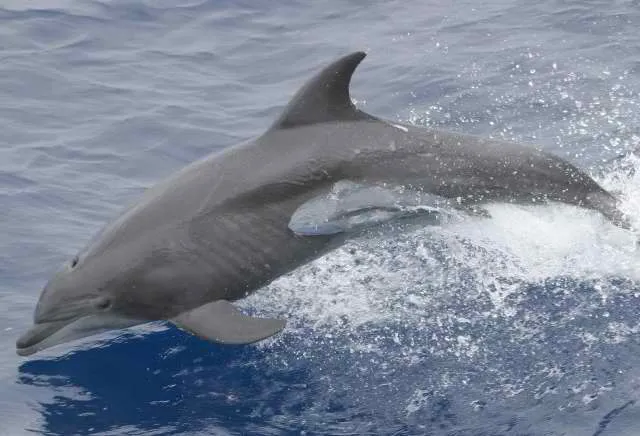
A whalesucker, as the name suggest, is highly selective on its host where you can only see them clinging to dolphins and whales. Their attachment to marine mammals are so restrictive that there is one report of a single whalesucker seen to have been attached to the same dolphin for at least 3 months. By the way, a whalesucker is often seen attached to a spinner dolphin in Cocos Island. On the not so palatable side of a remoras feeding (excuse us in advanced), they are known to feed on the feces and vomits of whales and dolphins aside from the parasites they get out of their host’s skin.
Spearfish Remora (Remora brachyptera)
- Max. Length
- 50 centimeters
- Length at 1st Maturity
- 29 centimeters
- Depth Range
- 1 – 85 meters (3 – 280 feet)
- Frequency
- Abundant in warm waters of the Indo-Pacific Ocean
- Host Animal
- Sharks, billfish and swordfish
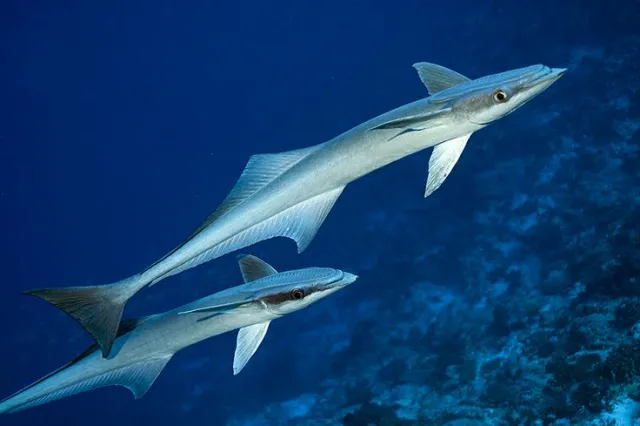
You can easily identify a spearfish remora through its white to pale blue body where you can see them often clinging to sharks and big game fish like billfish and swordfish. Their mode of attachment is quite unique compared to its cousins as it sometimes clings to the gill chambers and the lower or upper jaws of its host fish instead of the usual side body attachment.
Marlin Sucker (Remora osteochir)
- Max. Length
- 40 centimeters
- Length at 1st Maturity
- 28.8 centimeters
- Depth Range
- 1 – 200 meters (3 – 660 feet)
- Frequency
- Abundant in warm waters of the Indo-Pacific Ocean
- Host Animal
- Marlins, sailfish, manta rays and other pelagic fish
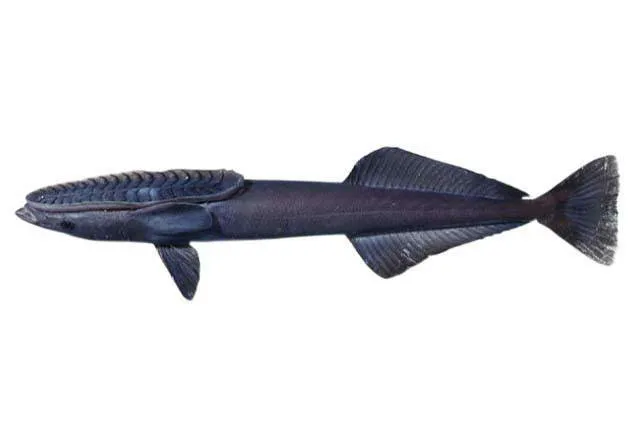
As their name suggests, this is one of the remora species where you can see them exclusively clinging to large pelagic fish such as marlins and sailfish. During their mating season in Cocos Island, you will usually see a distinct pair of marlin suckers clinging to a single host and will continue to cling on until they have successfully done their copulation.
Shark Sucker (Remora remora)
- Max. Length
- 86.4 centimeters
- Length at 1st Maturity
- 47.1 centimeters
- Depth Range
- 1 – 200 meters (3 – 660 feet)
- Frequency
- Abundant in warm waters of the Indo-Pacific Ocean
- Host Animal
- Sharks, whales and dolphins
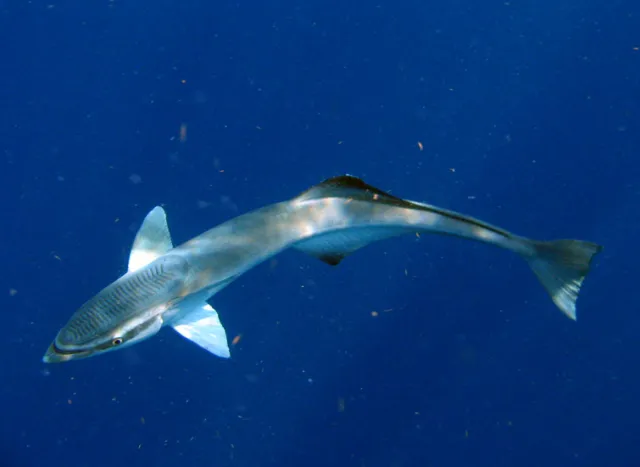
During your underwater adventures in Cocos Island, you can easily identify a shark sucker through its brown-grey body where they are mostly attached to a shark host, thus its name. This is one of the few species of remora where their juveniles have a dorsal fin which will eventually developed into a suction disc once it matures. Legend tells us that their scientific name was derived from the word “delay” where they were once believed to cling to the hulls of a ship in huge quantity causing massive drag and delay of the ship’s travel.
Used in Chinese Medicine
Remoras are a highly priced raw material in Chinese medicine where it is believed to cure several ailments such as coughs, colds and high fever. The remoras are dried and pounded until it produces a powder where it is further mixed with medicinal plants. Of all the remora species, the white suckerfish commands the highest price where a kilo of dried raw material can fetch up to $50. Moreover, illegal fisherman tends to cater to the demands of the Chinese market as they can easily catch a remora while fishing for sharks. This is another lucrative but unsustainable business for them where both sharks fin and dried remoras commands a good price.
But for us, if you have the ailments mentioned earlier, we suggest you see a doctor or a specialist where they can treat your ailment using the proper medicine and without destroying the delicate balance of our marine ecosystem especially in the offshore areas of Cocos island.
Reference
Fishbase: www.fishbase.org
IUCN Redlist of Threatened Species: www.iucnredlist.org
World Register of Marine Species: www.marinespecies.org
Video courtesy from WIRED