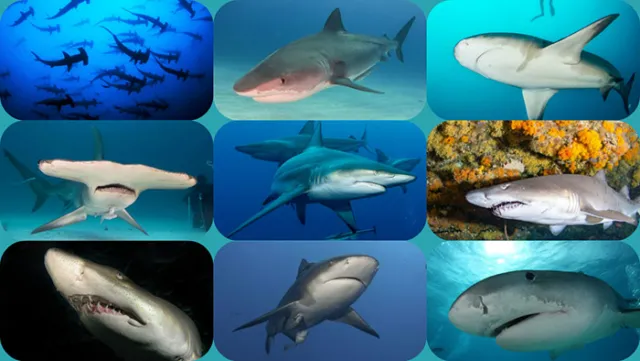

Blacktip Shark (Carcharhinus limbatus)
- Max. Length
- 275 centimeters
- Length at 1st Maturity
- 105.3 centimeters
- Max. Weight
- 123 kilograms
- Depth Range
- 0 – 100 meters (0 – 330 feet)
- Frequency
- Near threatened due to high demand in shark’s fin

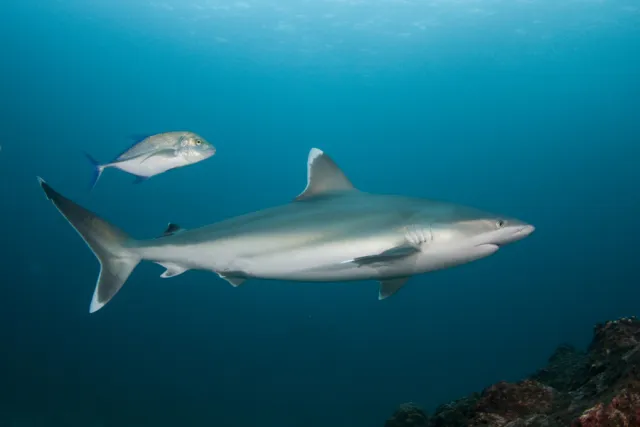
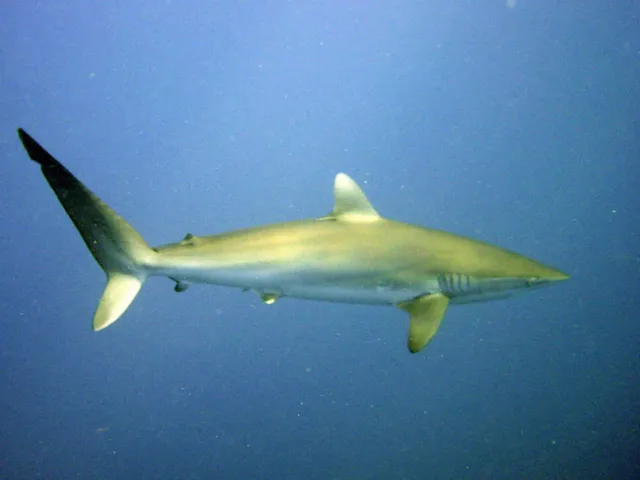
While the possibility of interacting several shark species in just one dive in Cocos island is high, each shark has its own distinguishing marks and behavior where you can easily identify each one of them. As far as the blacktip sharks are concerned, you can easily identify them through its stout body that is colored dark grey. Sometimes its body color varies depending on environmental factors where you can see them ranging from ashy blue to dusky bronze. But regardless of these variations in their general body color, their bellies are persistently colored white sometimes with a touch of yellow undertone.
They have a long, narrow and pointed snout, their gill slits have a relatively long opening and their dorsal fins are straightly erected. But if there is one easy way to identify them, then look for the black band that can be found at the tip of their pelvic, anal and dorsal fins.
Marks that Fade Away

While you already know that the black band on the tips of their fins are their trademark, you should never rely on it especially if you are into fish identification.
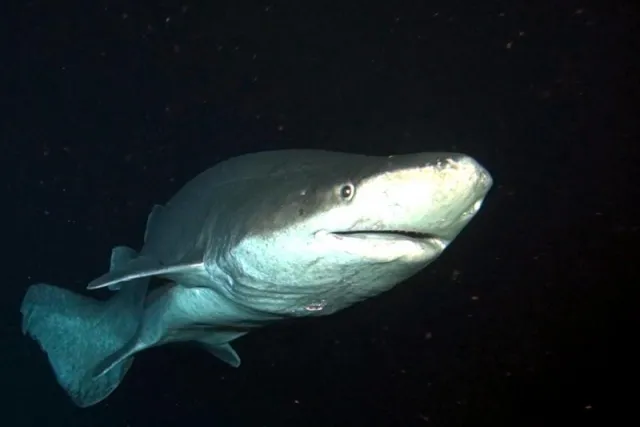
You must take note that the black band fades away as the shark grows old. This is manifested by the full cover picture on top and the one on this side where it shows an adult blacktip shark having no more visible black bands on its fin tips.
With this information, you can now use this knowledge in filling up your dive log and in scientific studies where your guide will be: a pronounced black band means that the shark is still a juvenile while diminishing marks means its an adult.
So much on the markings, now let’s move on to its behavior.
Dangerous when Provoked
Generally, blacktip sharks poses no threat to humans due to their timid natural behavior. We often mistake them to have an aggressive behavior due to the fact that they mostly approach the interaction with a swift and agile swimming. But in reality, they are just curious with our presence underwater.
However, despite all of this, if you try to provoke their presence by making any unnecessary movement towards the animal (like touching them), they can become agitated. This is especially true if your try to feed blacktip sharks. As of 2008, there are 28 recorded attacks by a blacktip shark. Most of these attacks only resulted to minor wounds, but in extreme cases, can cause traumatic wounds where 1 incident out of that 28 recorded attacks has resulted into a diver’s death.
Knowing all this, respecting their presence is still the best thing to do when you go diving in Cocos Island. After all, it’s their territory and not ours.
Reference
Fishbase: www.fishbase.org
IUCN Redlist of Threatened Species: www.iucnredlist.org
Marine Bio: www.marinebio.org
Video courtesy from Capt. Mark Sampson