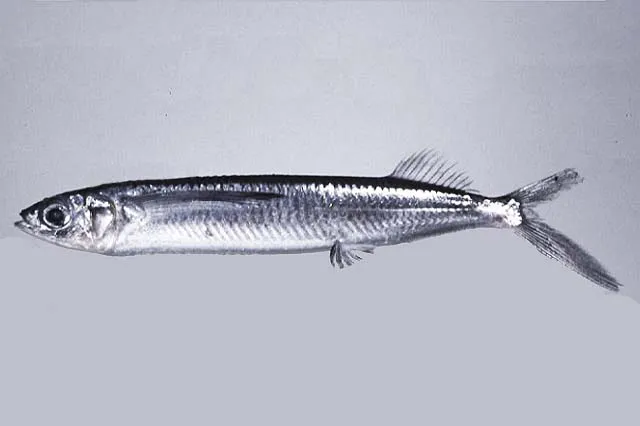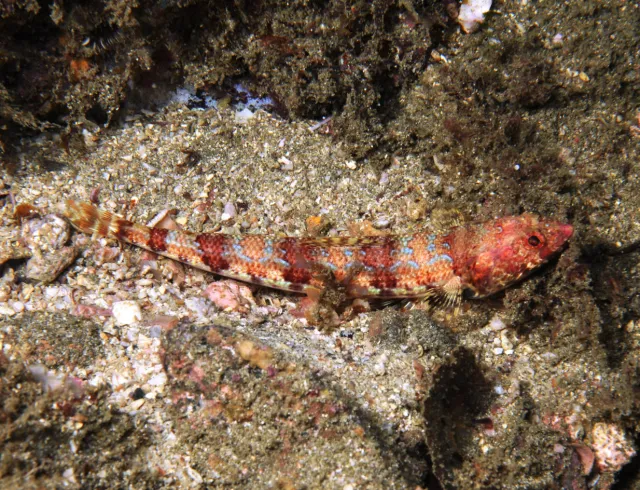

Ribbon Halfbeak (Euleptorhamphus viridis)
- Max. Length
- 53 centimeters
- Length at 1st Maturity
- 30.6 centimeters
- Depth Range
- 0 – 1 meter (0 – 3 feet)
- Frequency
- Abundant in the shallow waters of the Indo-Pacific Ocean
This is one of the fish species in Cocos Island that you can easily identify through its long and slender body that looks like a ribbon, hence its name. It has a blue-green upper body color with mostly silver shading on the side while their fins are not pigmented as compared to other species of halfbeaks. Their caudal tail is extremely forked which means it is capable of doing short burst of speed. In fact, you may see them in Cocos Island jumping off the water and may glide for over a few meters especially if predators are in chase.
As far as their lower jaw is concerned, a ribbon halfbeak has one of the highest body to mouth ratio where their lower jaw may extend at least 25% from its total body length. That is the reason why if you try to look at their maximum length, it can reach over half a meter even if the actual body size is just over 30 centimeters.
No Stomach but instead has a Food Mill
Considering the size and shape of a halfbeak mouth, you can expect that what they eat are relatively small. This is true as their main source of nutrition are microscopic organisms called plankton. However, there are instances that they may take in small fish and shrimps. With this, have you ever wondered how halfbeaks take in their food considering that they have a very slender body that has no stomach?
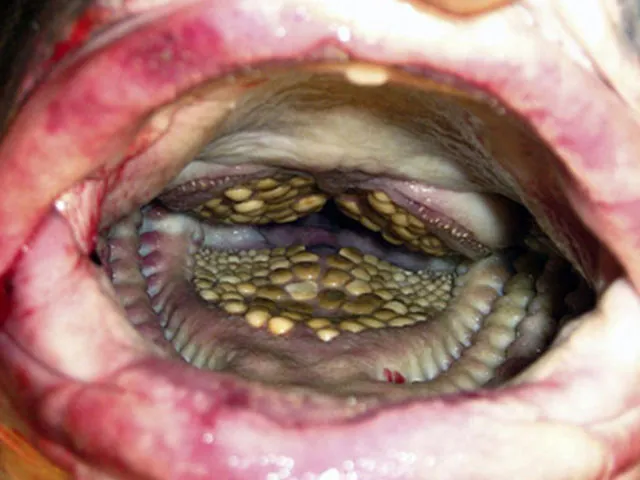
The absence of a stomach in halfbeaks is compensated with a biological apparatus called the “Pharyngeal Mill”. This evolutionary adaptation is shown through several rows of teeth, not just in the jaws, but also in their tongue and in the roof and base of the mouth where it is designed to cut and grind their food.
Since we were not able to get a picture of a pharyngeal mill from a halfbeak, the picture presented in this sub-section is the biological apparatus that is being employed by most bony fish without a stomach or has a limited digestive capacity. Please remember that this is just for demonstration purposes only and does not represent the anatomy of a halfbeak.
But on a lighter side before we end this article, here’s a question to ponder: On the onset of evolution for the next generation, do you think future humans will posses a pharyngeal mill? If so, do you think present digestive ailments could be the thing of the past?
Reference
Fishbase: www.fishbase.org
Encyclopedia of Life: www.eol.org
World Register of Marine Species: www.marinespecies.org