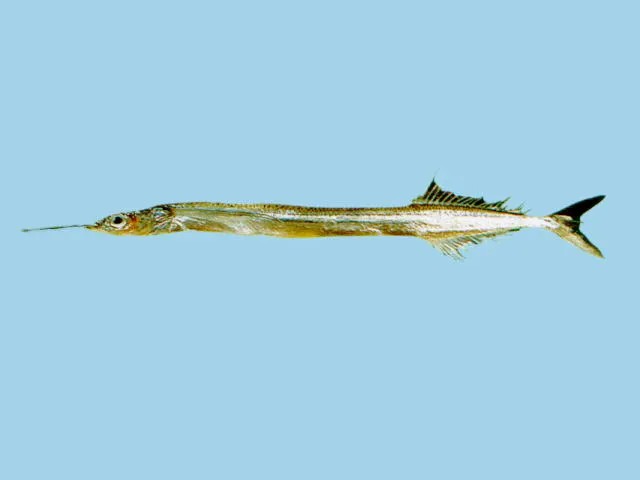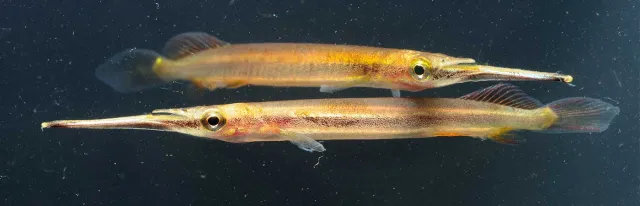
Bigwing Halfbeak Fish (Oxyporhamphus micropterus)
- Max. Length
- 18.5 centimeters
- Length at 1st Maturity
- 14 centimeters
- Depth Range
- 0 – 1 meter (0 – 3 feet)
- Frequency
- Abundant in the shallow waters of the Indo-Pacific Ocean
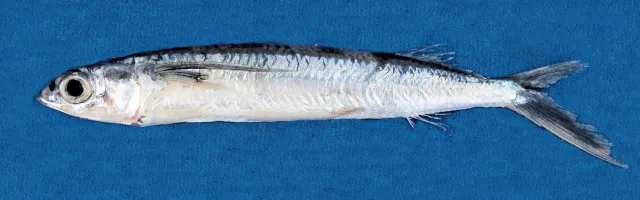
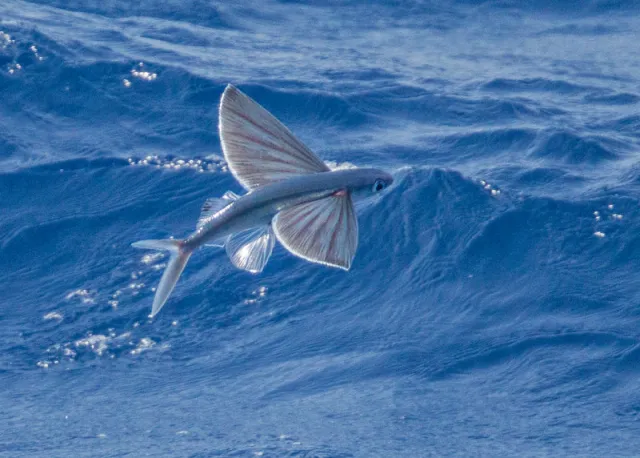
A bigwing halfbeak is one of the fish species in Cocos Island that might be confusing or may give you a hard time identifying. Nonetheless, here are some pointers to aide you in their identification: First, they have a cylindrical body that are colored dark blue with a shade of black on the upper body while the lower body is mostly silver especially on the lower side. Their elongated pectoral fins are colored black and highly developed while the caudal fin is uneven in size where the lower caudal fin is much bigger that the upper caudal fin. In Cocos Island, they inhabit the shallow depths of the open water environment where you can often see them towards the end of your dive while performing a safety stop before making a direct ascent to the surface.
Halfbeak Fish or Flying Fish?
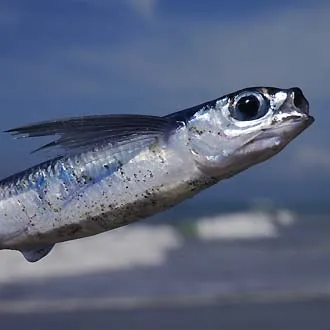
If you try to scrutinize any of the picture in this article that presents our featured species, then you may think that we have placed the wrong picture for reasons that it does not fit the description of a halfbeak where both of the jaws are almost aligned. You may even come to the conclusion that what’s in the picture is a flying fish due to its similar appearance plus the resemblance of their elongated pectoral fin.
If you notice this difference, then congratulations for you already have developed your keen sense for observation. But don’t get too excited as the pictures presented in this article are all correct.
The reason behind this is that what is presented in the picture are mature specimens and that the protrusion of the lower jaw occurs only when the animal is still in its juvenile stage.
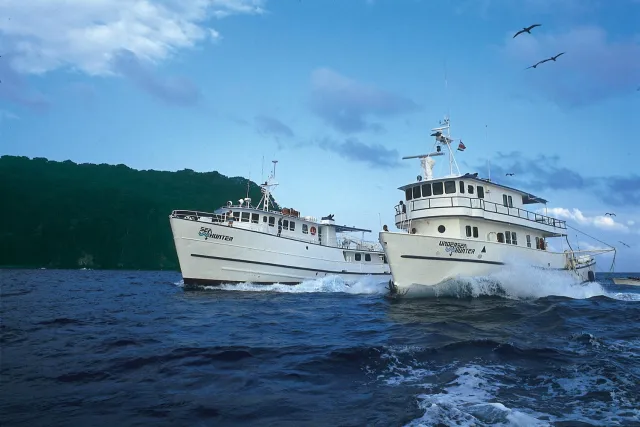
Now that we are settled down from a confusing description, let’s talk about its behavior. This is the part where a bigwing halfbeak has a striking resemblance with a flying fish where you can see both species in Cocos island leaping out of the water. This happens when a bigwing halfbeak is chased by a predator like big pelagic fish where they use their highly developed pectoral fin to leap out of the water, glide a few meters away while evading the supposedly end of their line. Not just during diving, but you can also see a bigwing halfbeak leaping out of the water while you are cruising on your liveaboard vessel. For example, the upper deck of MV Argo and MV Sea Hunter will give you a nice view of the ocean where you can clearly see a leaping halfbeak and be amazed by their ability to leap and glide over the surface water.
Reference
Fishbase: www.fishbase.org
World Register of Marine Species: www.marinespecies.org
ITIS: www.itis.gov