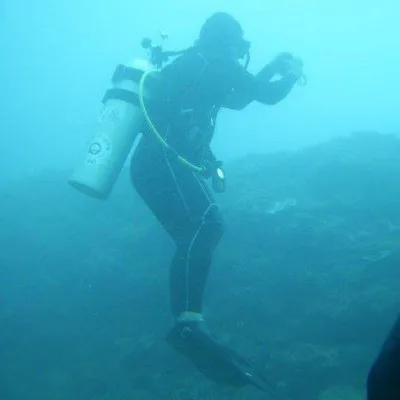
Before you end every dive in Cocos island while performing a safety stop at 15 feet for 3 minutes, you will observe that there are several species of fish thriving in this shallow area. Most probably, what will get your attention while waiting for that 3 minutes to lapse is this small fish with a half-broken beak.
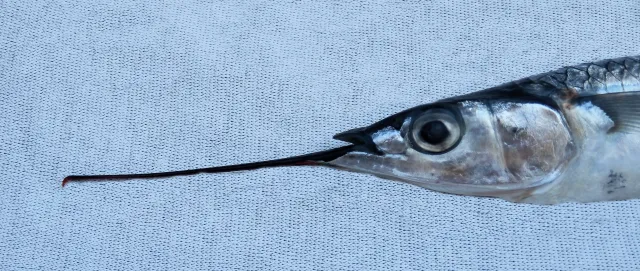
Actually their beaks are not broken, but rather, its lower jaw is just extended way too far from its upper jaw, thus giving you the name Halfbeak.
This epipelagic fish which occupies only the first few meters of the water column, despite their oddly looking appearance, has several adaptations that enables them to survive the dynamics of the wild marine environment. For example, their eyes and nose are located at the top of their head while the short upper jaw can be moved sideways. This is further complimented with their streamlined bodies with fins that are mostly concentrated at the back portion enabling them to do a sudden burst of speed that allows them to easily catch food or evade a predator. But what really makes a halfbeak an odd marine creature is that is has no stomach where digestion takes place in the throat in a biological apparatus called pharyngeal mill.
Species of Halfbeaks in Cocos Island
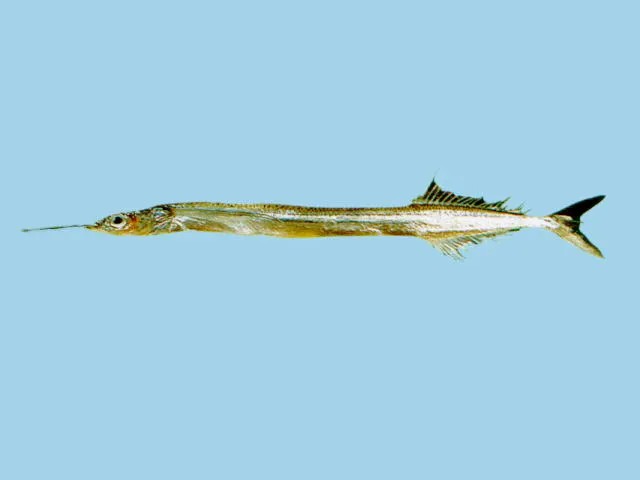
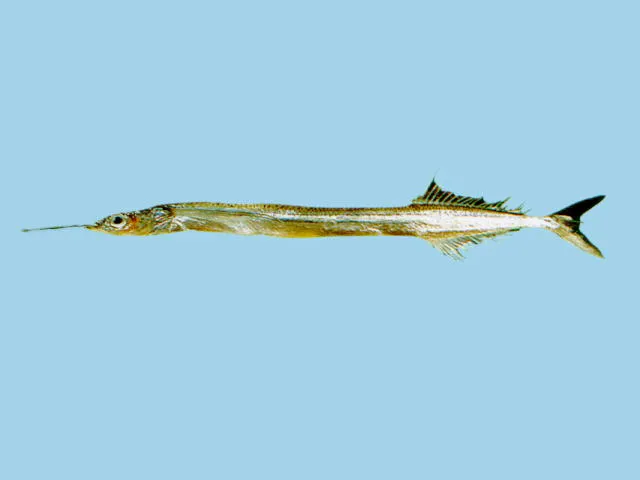
Ribbon Halfbeak Fish (Euleptorhamphus viridis)
- Max. Length
- 53 centimeters
- Length at 1st Maturity
- 30.6 centimeters
- Depth Range
- 0 – 1 meter (0 – 3 feet)
- Frequency
- Abundant in the shallow waters of the Indo-Pacific Ocean
Despite growing over half a meter long, a ribbon halfbeak has a common size of 30 centimeters in length where they thrive near the surface of the open water environments such as the one surrounding Cocos Island.
You can easily identify a ribbon halfbeak through its elongated body where the scales are highly visible. In terms of jaw length, the upper jaw is short while the lower jaw is very long. This is also one of the halfbeak species where their fins have no pigmentation.
For more information, you can read our related article about Ribbon Halfbeak Fish.
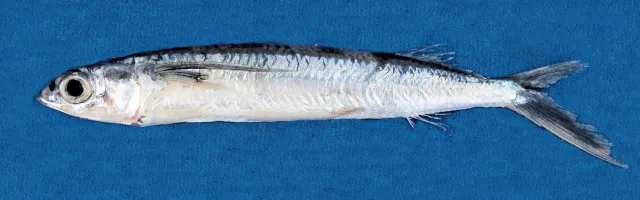
Bigwing Halfbeak Fish (Oxyporhamphus micropterus)
- Max. Length
- 18.5 centimeters
- Length at 1st Maturity
- 14 centimeters
- Depth Range
- 0 – 1 meter (0 – 3 feet)
- Frequency
- Abundant in the shallow waters of the Indo-Pacific Ocean
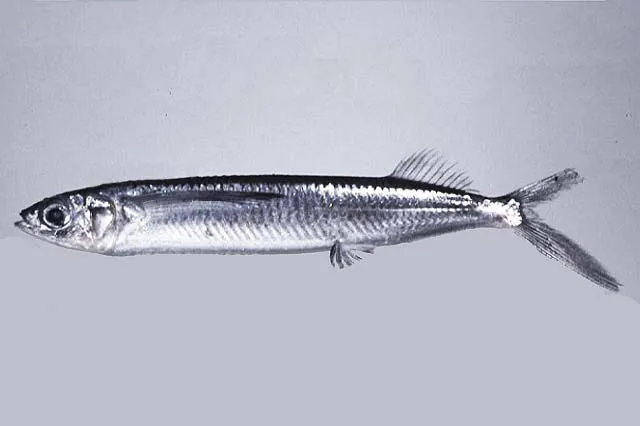
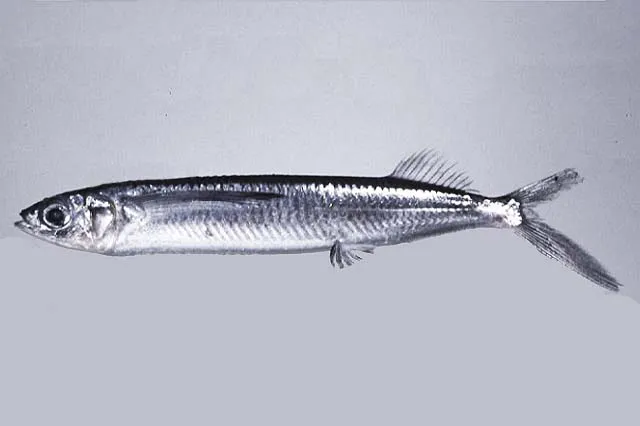
A bigwing halfbeak is one of the fish species in Cocos island where you can often see them in the shallow areas of the open water environment rather than in habitats that are close to shore. You can easily identify them through their elongated and cylindrical bodies that are colored dark blue with a shade of black on the upper portion while silvery on the lower side.
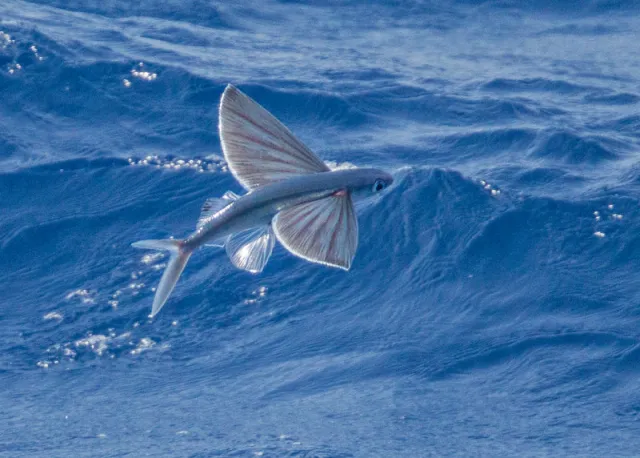
But you may wonder why its picture does not look anything like a halfbeak. In fact, it looks something like a flyingfish. The reason behind this is that what’s in the picture is an adult specimen where the protrusion of the lower jaw occurs only in its juvenile stage. But as far as behavior is concerned, a bigwing halfbeak is considered similarly close to a flyingfish. When they are chased by a predator like big pelagic fish, they used their highly developed pectoral fin to leap out of the water, where in Cocos Island, you can see them literally flying just a few inches from the surface which can run up to a few meters.
For more information, you can read our related article about Bigwing Halfbeak Fish.
Reference
Fishbase: www.fishbase.org
World Register of Marine Species: www.marinespecies.org
Encyclopedia of Life: www.eol.org
Video courtesy from KTPhotography