Pelican Barracuda (Sphyraena idiastes)
- Max. Length
- 91 centimeters
- Length at 1st Maturity
- 49.3 centimeters
- Depth Range
- 3 – 24 meters (10 – 80 feet)
- Frequency
- Abundant in the Southeast portion of Pacific Ocean
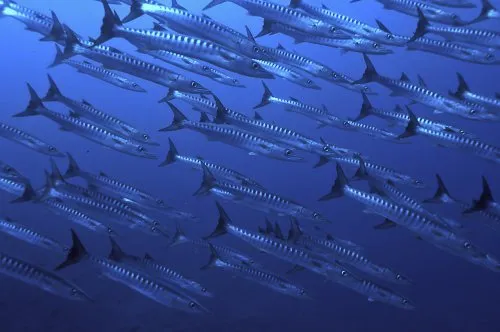
Cocos Island is known to house a great population of schooling fish where one of the species that congregates in huge numbers are the Pelican Barracuda. You can easily identify them through their elongated and cylindrical body that are relatively slender where you can visibly notice it when they are swimming.
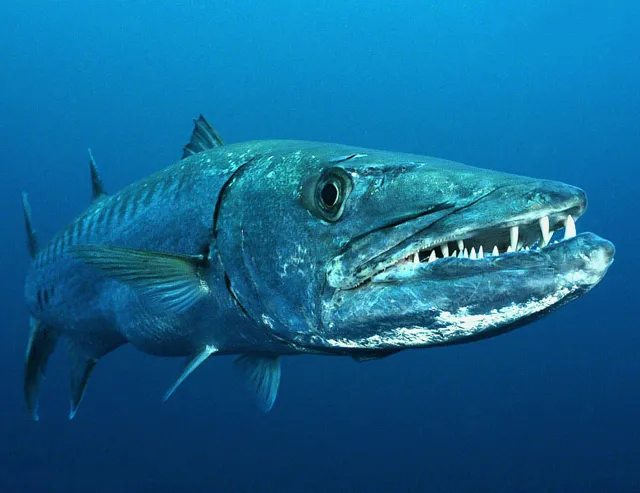
Aside from this, other identifying marks include a grey-colored body that has several oblique black bars on the upper portion of its body. Their head is long with a long and pointed snout and a large protactile mouth that is equipped with several sharp teeth that are unequal in size.
In Cocos Island, you can usually see a school of Pelican Barracuda that is composed of 200 individuals on the average. You can see their presence just a few meters off the reef. If you are lucky enough and able to see a feeding Pelican Barracuda, you will observe that it will slash its prey (usually fish) into several pieces before it is being fully consumed. Competition may also set in as other pelican barracuda may snatch a part of its meal.
Showy but not Aggressive to Humans
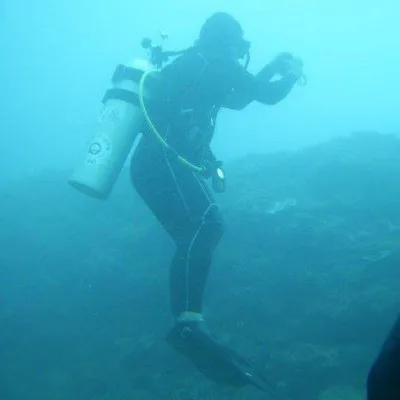
While Pelican Barracudas often show off their force through numbers where they are often feared by small reef fish, they pose no threat to humans. Some may fear it due to the fact that their name bears the word “barracuda”, but in reality they’re not. Just remember this rule of the reef: A schooling fish is generally not dangerous, but you have to take caution for solitary hunters as they often become easily curious to our presence underwater and may charge if we do any untoward action. An example of this solitary hunter is the Great Barracuda. Kidding aside while a great barracuda inspects our nearby presence and only if they could talk, then they could ask this question to themselves: What kind of food is this that expels bubbles from its mouth? Might as well take a closer look.
Reference
Fishbase: www.fishbase.org
IUCN Redlist of Threatened Species: www.iucnredlist.org
Encyclopedia of Life: www.eol.org