Pacific Graysby (Cephalopholis panamensis)
- Other name
- Panama Graysby
- Max. Length
- 39 centimeters
- Length at 1st Maturity
- 17.7 centimeters
- Depth Range
- 5 – 80 meters (17 – 260 feet)
- Frequency
- Abundant in the reefs of Eastern Pacific Ocean
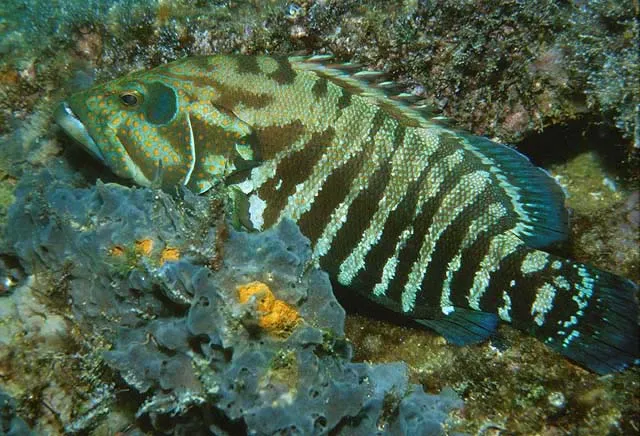
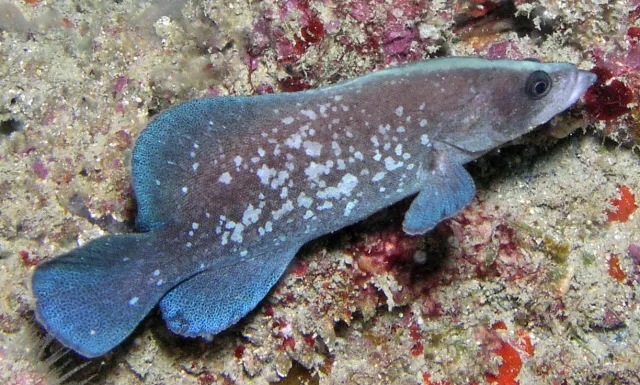
The robust and oblong shaped body of this medium sized grouper is one of the distinct characteristics that aides you in identification. Aside from this, you can easily identify a Pacific Graysby through its grey-brown colored body that has 9 black vertical bars and pale yellow bands in between. While the blending of black and yellow color creates a perfect contrast, but if you try to look deeper at their body, you will notice that a Pacific Graysby is dotted with blue and orange spots around its body.
As to the other parts of their body, their snout is relatively long which usually exceeds the length of its eyes. They have a unique dental system where their teeth are highly movable and finely serrated which is their primary asset in predation. On top of this, Pacific Graysby have scales covering the entire body but are small in size.
A Shy but Dangerous Reef Resident
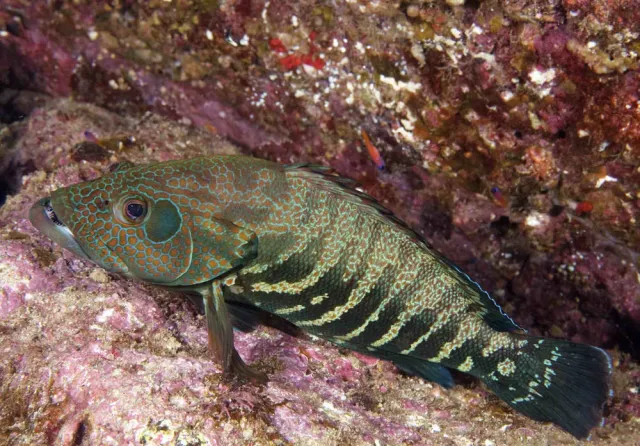
A Pacific Graysby thrives in the rocky crevices of the reef. But instead of showing its might to nearby reef residents, a Pacific Graysby prefers to stay inside cracks and crevices. Although they may occasionally go out and wander around the reef, you will observe them during your underwater adventures in Cocos island that they stay close to their hiding place which perfectly describes their behavior as a highly territorial species.
While being considered a shy reef resident, this does not mean that other fish can bully a Pacific Graysby. This is especially true for small fish that tries to invade their territory where bullies can often lead them in to the menu of the day. Not unless the one bullying are larger fish, then it is the other way around.
Reference
Fishbase: www.fishbase.org
IUCN Redlist of Threatened Species: www.iucnredlist.org
Encyclopedia of Life: www.eol.org
Video courtesy from Summerhays Films