When you go diving in Cocos Island, you will notice that there are snake-like creatures that lives in cracks and crevices or swimming near the sand. Most probably, what you have seen are eels. But to make sure that you are interacting with the right animal, allow us to describe the characteristics of an eel, its behavior and the different eel species that you can find in Cocos island.
Are Eels related to Sea Snakes?
No. Although they look similar, eels and sea snakes are not related to each other. You have to take note that sea snakes are reptiles. Similar to its land-based counterparts, sea snakes need to breath in air, where in their case, needs to go up in the surface water. Otherwise, they will die of drowning.
On the other hand, eels are classified as fish. They have anatomical features similar to your typical fish like gills for breathing, fins for swimming and gas bladder for buoyancy and stabilization. They don’t need to surface up to breath in. But instead, they constantly open and close their jaws allowing water to move inside their mouth where oxygen is extracted in their gills.
Another difference between an eel and a sea snake has something to do with how they hunt. Similar to land snakes, sea snakes bites their prey while simultaneously releasing toxic venom causing the prey to be stunned and paralyzed. After which, the sea snake can easily take in their prey as a whole as what land snakes usually does. Eels don’t have toxic venom. Instead, they have powerful jaws and an extensive dental system where they use this in snatching and munching their prey in to pieces.
Major Species of Eels in Cocos Island
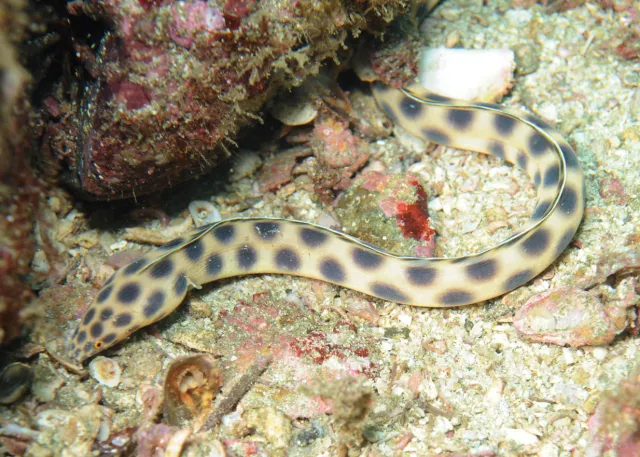
Spotted Snake-eel (Myrichthys tigrinus)
- Max. Length
- 74 centimeters
- Length at 1st Maturity
- 71.1 centimeters
- Depth Range
- 0 – 60 meters (0 – 180 feet)
- Frequency
- Abundant in the rocky reefs of the Eastern Pacific Ocean
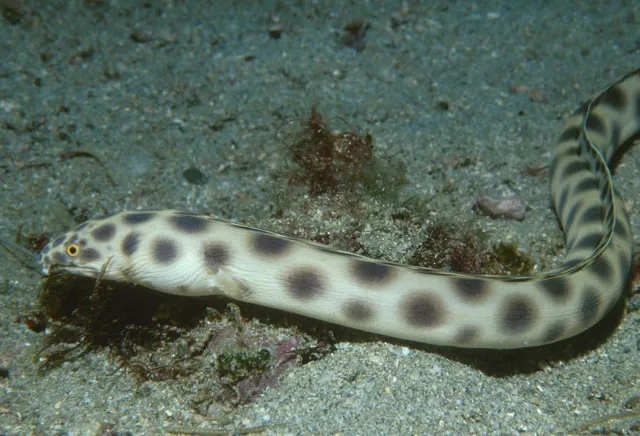
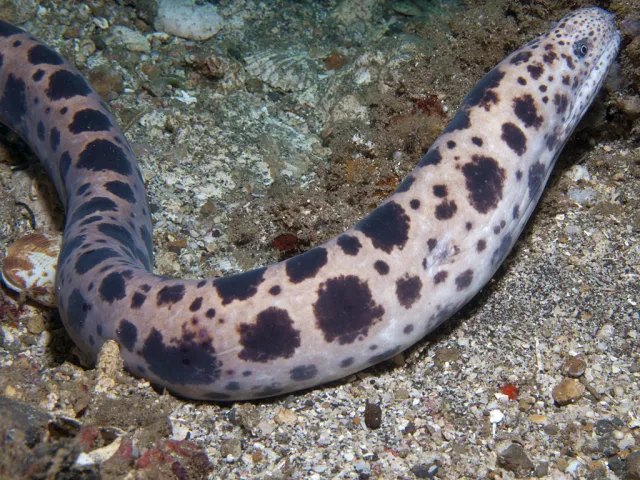
You will usually find a spotted snake eel in Cocos island thriving in a sandy to muddy bottom interspersed with rocks. In case you see a spotted snake eel, you will notice that they not are entirely hidden under the rock. Instead, they mostly take refuge on the side of any solid object while waiting for a small prey to come and do an ambush attack. After munching in their prey, they usually shift in to a relax mode where they prefer to bury themselves under the sand with only the head partly exposed.
While there are other eels not entirely covered under a rock, you might as well remember some important body feature. You can easily identify a spotted snake eel through its elongated body with a very short snout. They have a white-yellow body color with grey-black oval spots scattered around its body where the dot patterns are similar to the ones with a giraffe.
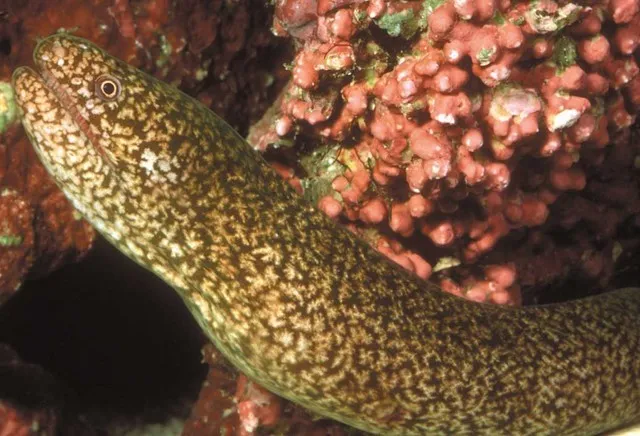
Needle-tooth Moray Eel (Uropterygius macrocephalus)
- Max. Length
- 47 centimeters
- Length at 1st Maturity
- 27.5 centimeters
- Depth Range
- 1 – 14 meters (3 – 45 feet)
- Frequency
- Abundant in the rocky reefs of the Indo-Pacific Ocean
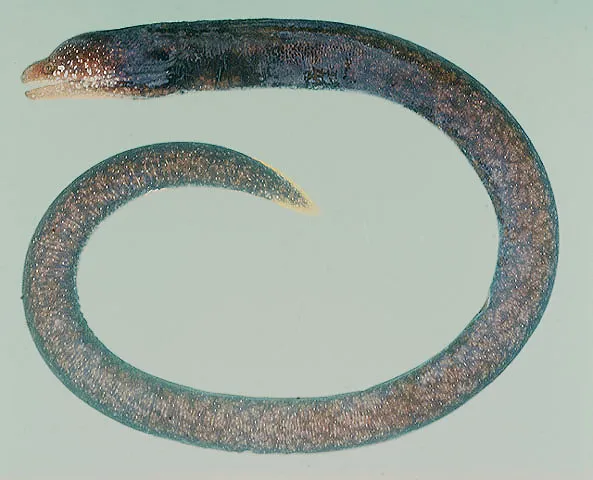
If there was a Guinness World Record for the most number of eel teeth in a single animal, then the title would be held by the needle-tooth moray eel. Each of their jaw has two rows of teeth which may sum up to 120 tooth. But the sheer number of teeth is not really their asset of being an effective predator.
Each tooth are conical in shape and extremely sharp. When you are able to see how a needle-tooth moray eel attacks their prey, you will notice that it takes strong hold of it. It sustains the bite until its prey succumbs to its death. Once they grab their prey, the chances of escaping this ambush predator is reduced to almost none.
Although this brown colored eel that is mottled with white and yellow is not potentially dangerous, we suggest that you keep a safe distance in interacting with them as they become threatened when you come close and may possibly strike a bite. Lucky for you if you wear a 5 millimeter wetsuit as the thickness of this exposure suit can prevent the penetration of their bite.
Tiger Reef Eel (Scuticaria tigrina)
- Max. Length
- 140 centimeters
- Length at 1st Maturity
- 72.1 centimeters
- Depth Range
- 8 – 25 meters (25 – 85 feet)
- Frequency
- Abundant in the rocky reefs of the Indo-Pacific Ocean
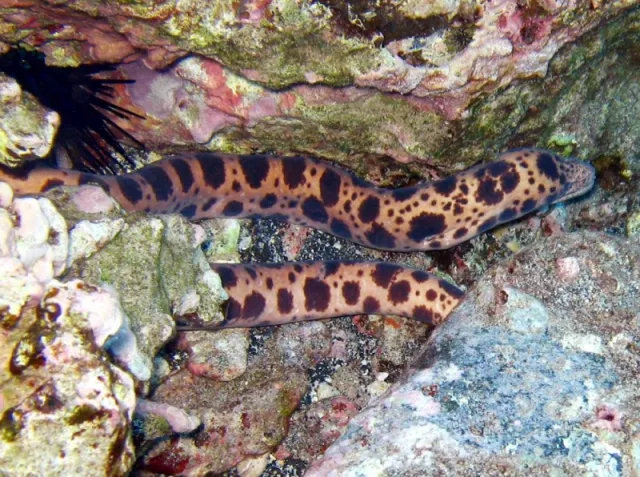
A tiger reef eel is one of the larger and longer species of eel you can find in Cocos island. Their highly elongated and semi-rigid body can grow up to 1.4 meters where the dark blotch and dense body spots are their easy identifying mark.
In case you are looking for a tiger reef eel during the day, we suggest that you look deep inside cracks and crevices as they extremely shy and secretive. But as night falls and you go for a night dive, your chances of seeing them out in the open is higher as they go out of the den and becomes highly active in search for food.
Jewel Moray Eel (Muraena lentiginosa)
- Max. Length
- 61 centimeters
- Length at 1st Maturity
- 34.6 centimeters
- Depth Range
- 5 – 25 meters (15 – 85 feet)
- Frequency
- Abundant in the rocky reefs of the Eastern Pacific Ocean
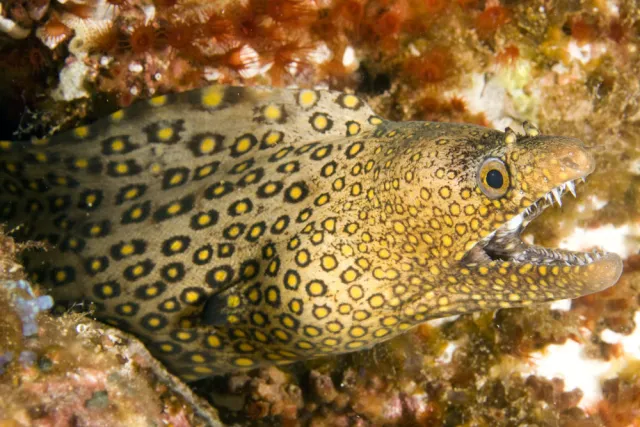
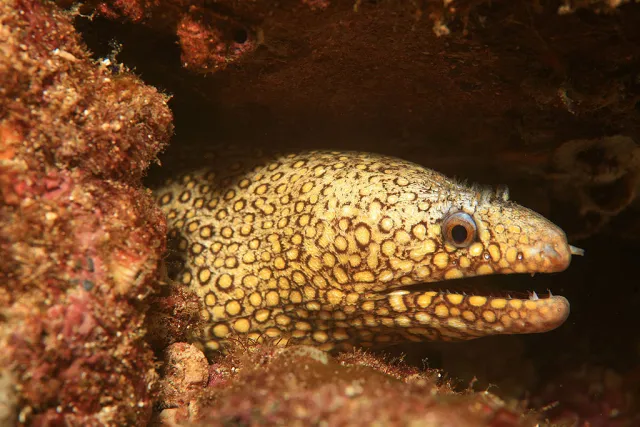
If you come face to face with a jewel moray eel, it will give you an impression that it will bit you. With this, we highly advise you to believe on that impression since a jewel moray eel will really bit anything that comes to close, including you.
Having narrow jaws with teeth that are highly embedded, sharp and slightly hooked backwards, a jewel moray eel can easily take off the flesh of its prey. Since this medium-sized eel is aggressive, you have to take note of their behavior before an attack happens. Most of the times, you will see a jewel moray eel constantly opens and closes its mouth. This is not a sign of aggression but rather a mechanism for them to breath. But when you come close to its den and notice that the animal recoils its body towards the back, then you have to immediately establish a safe distance since this is an indication of an attack.
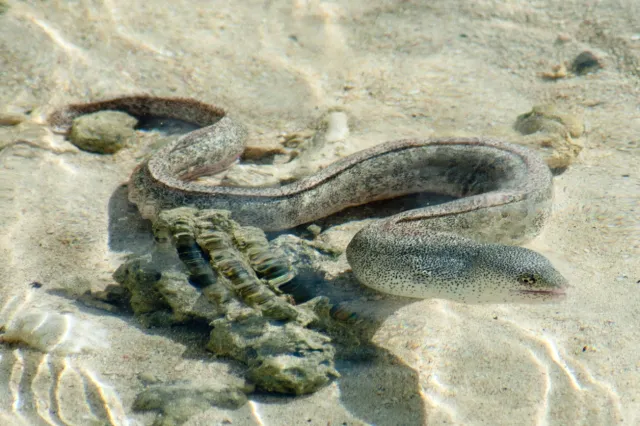
Paintspotted Moray Eel (Gymnothorax pictus)
- Max. Length
- 140 centimeters
- Length at 1st Maturity
- 72.1 centimeters
- Depth Range
- 5 – 100 meters (15 – 300 feet)
- Frequency
- Abundant in the rocky reefs of the Indo-Pacific Ocean
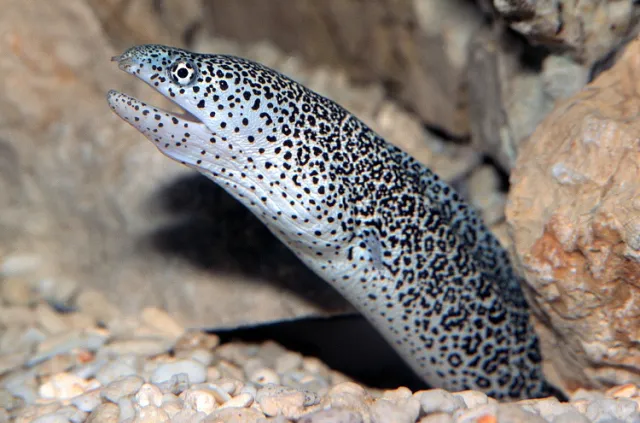
A Paintspotted Moray Eel is both secretive and highly mobile. During your underwater adventures in Cocos island, you can witness this contrasting characteristics where you can see a paintspotted moray eel frequently comes in and out of any solid object while wandering the reef.
If they sense that there are no threat or nearby predators, they will go out of their hiding place exposing themselves entirely out in the open. They usually wander around the reef until they can find the perfect hiding spot where food can easily be grab.
Reference
Fishbase: www.fishbase.org
Destination 360: www.destination360.com
Montezuma Beach: www.montezumabeach.com
Video courtesy from Distaplia