
Cocos flycatcher (Nesotriccus ridgwayi)
- Maximum Length
- 13 centimeters
- Maximum Weight
- 11 grams
- Frequency
- Abundant only in Cocos Island
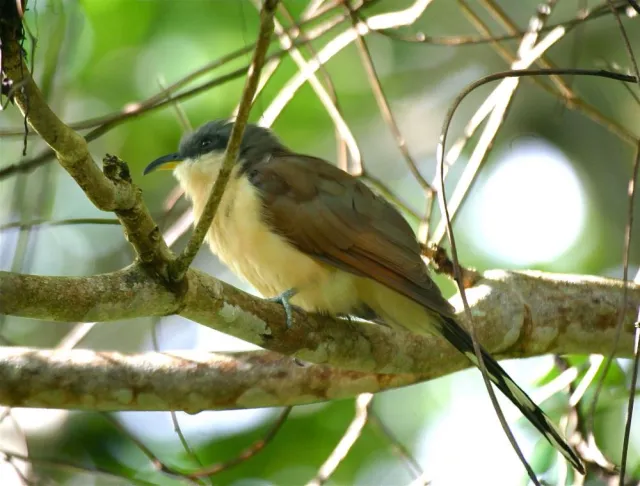
Although resembling closely like your common city bird, the Cocos flycatcher is endemic to Cocos Island which is known to have a huge appetite for flies and other insects courtesy of its long bill.
Aside from the broad and long bill, you can easily identify a Cocos flycatcher through their grey to brown-olive colored bodies. They are usually found in the upper edges of the forest especially in areas with secondary woodland growth or in swampy areas with an overhead tree covering called as the crown.
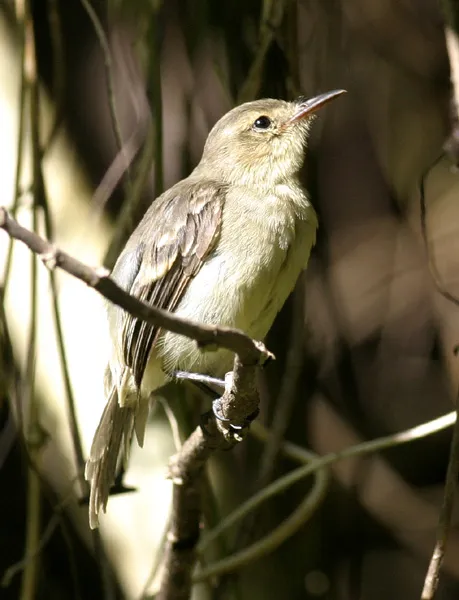
Speaking of overhead structures, if coincidentally your liveaboard cruise to Cocos island is set to depart anywhere from January to April, you can see them flocking the upper portions of the forest where they are building their nest. In case you forget to bring a pair of binoculars, you can still interact with a Cocos flycatcher through sounds. Their sounds are quite unique creating their own signature voice described as an explosive dry pitch that starts with a 6 to 9 chattering sound with an interval of one to second which will eventually speed up until it stops clattering.
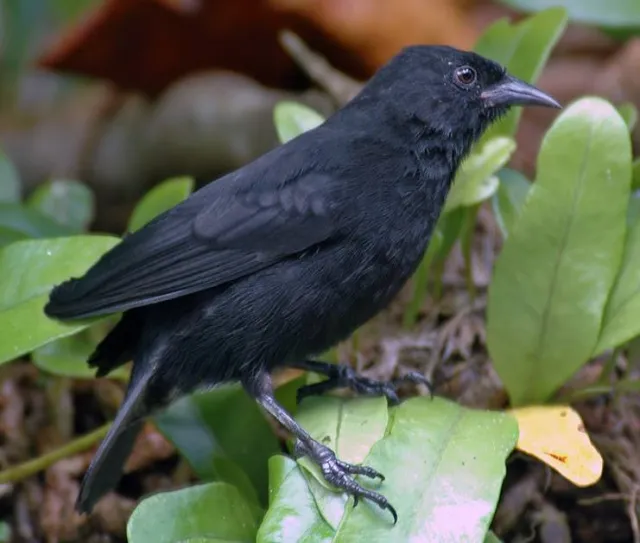
Same with the generalist Cocos finch, the Cocos flycatcher has a wide range of diet. You can see them eating fruits or can feast in small arthropods like spiders. But recent studies shows that a Cocos flycatchers’ favorite meal are the plant-hopping insects which comprised about 50% of their diet.
Threat and Conservation
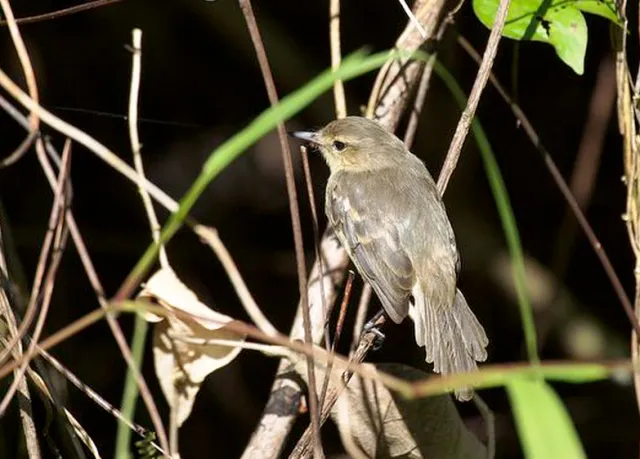
With an estimated population of 15,000 thriving in a limited area of 30 square kilometers, the Cocos flycatcher is vulnerable due to its tiny range of habitat as compared to your common city bird. On the brighter side, it shows to be highly tolerant against introduced species like rats and feral cats despite causing degradation to their habitat or predation.
There is no direct conversation measures for the Cocos flycatcher as their population is considered stable. But what the government is studying, for management purposes, is how to minimize the effects of the introduced species (which was introduced by the government itself years ago) not just to the Cocos flycatcher, but the overall endemic species population as well.
Reference
Wikipedia: www.wikipedia.org
Cornell Lab of Ornithology: www.neotropical.birds.cornell.edu
Handbook of the Birds of the World: www.hbw.com