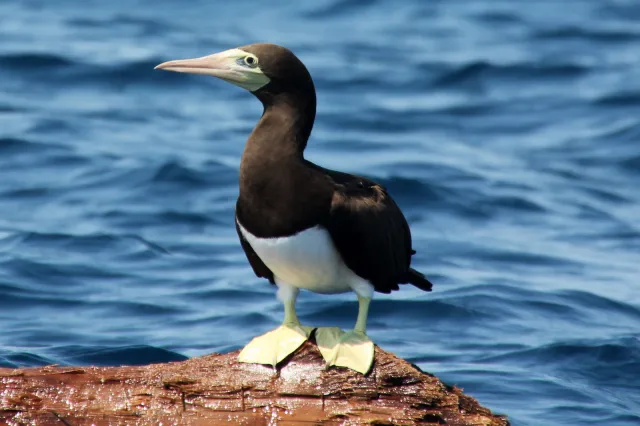

Cocos Cuckoo (Coccyzus ferrugineus)
- Maximum Length
- 33 centimeters
- Maximum Weight
- 25 grams
- Frequency
- Abundant only in Cocos Island
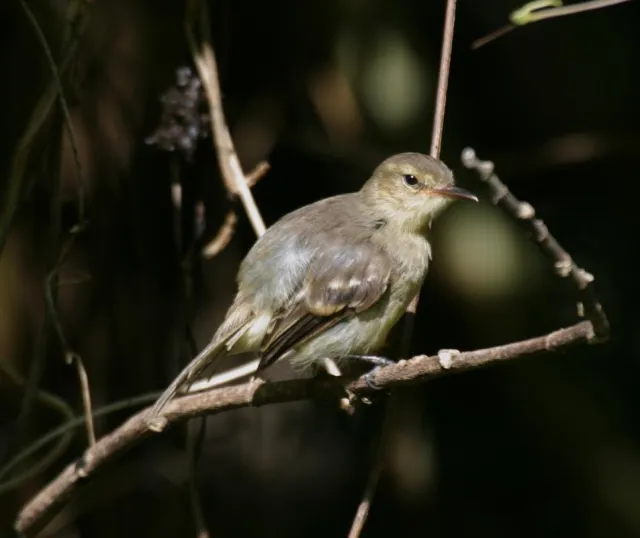
You can easily identify this medium-sized bird through its body with a grey crown, black mask, grey-brown upper part, rich buff underparts and a bright rufous wings. This endemic Cocos Island bird has a black tail with broad white coloration and eyes with a bright yellow ring, just imagine the legendary Zorro, only its the yellow version.
If you are into birding, you will know that a Cocos Cuckoo is just nearby just by recognizing the sound of its voice. This particular bird is known to possess a unique voice signature which can be described as a dry KCHA sound which is repeated 5 to 8 times and is further followed by a rolling rattling sound. For matured males, their distinct voice can be described as a regurgitating sound from the throat which produces the sound k’k’k’k’ru’hoo.
Rely on Other Birds to Survive
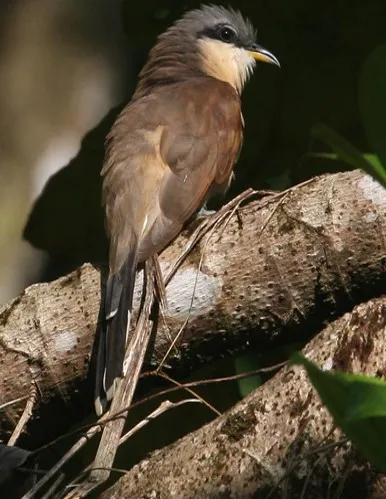
Cocos Cuckoo are known as a Parasitic Brood where they lay their eggs on the nest of other species and allow the host mother bird to raise their young. In most instances, the eggs of a Cocos Cuckoo are laid not just in one nest but in several nest ensuring the survival of their next generation.
This bad bird behavior has caught the attention of Ornithologist where they later discovered the so-called “Mafia Hypothesis“. They pointed out that the life of a host mother bird and her nest can be place in jeopardy if she refuses to take care of the eggs and eventually raise the juveniles of a Cocos Cuckoo. In human terms, it is like Forced Adoption.
Threat and Conservation
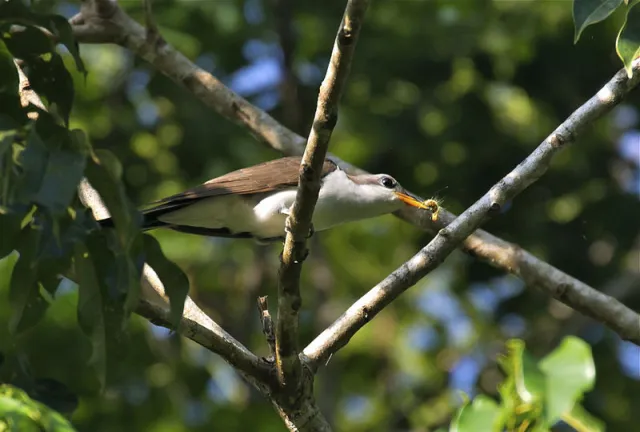
Based on a study conducted in 1999, an estimated population of 1,000 Cocos Cuckoo is thriving in the declared 30 square miles Endemic Bird Sanctuary placing them under the Vulnerable category. Aside from this, introduced species like cats and rats has increased the predation potential of Cocos Cuckoo while degrading or competing with their habitat for space and food. But despite this threats, the population of Cocos Cuckoo is still considered stable despite their low in numbers.
What the Costa Rican Government are doing is the continued survey to establish population trends and assess the impact of introduced species where it has initially been found out to degrade the habitat of local endemic species. What they are planning is the possibility of eradication of introduced mammals which they themselves have put it on the first place.
Reference
Wikipedia: www.wikipedia.org
Cornell Lab of Ornithology: www.neotropical.birds.cornell.edu
Birdlife International: datazone.birdlife.org