Derived from its land counterparts, butterflies and butterflyfish have a lot in common. First in the resemblance list is their brightly colored body. While you can see a variety of rainbow body colors in the entire butterflyfish family of Chaetodontidae, most of the species tend to have a yellow undertone. Second has something to do with behavior. Both are diurnal species where they are highly active during the day.
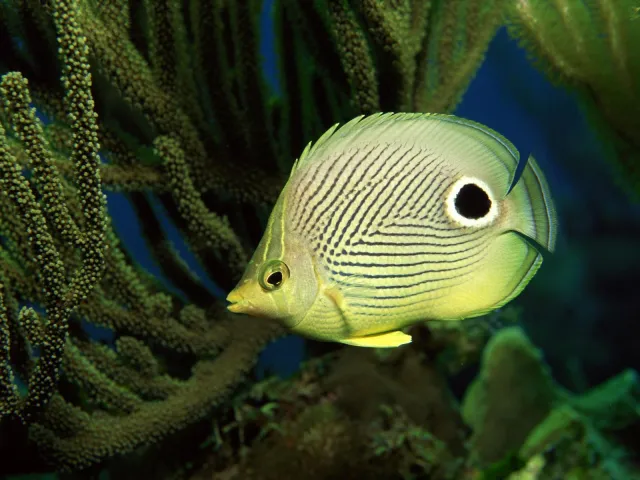
If you try to look at the shapes and figures a butterflyfish has, you will observe that most of the species possess a pseudo-eye. Usually in the form of a black colored dot located at the tail end, this false eyes aides a butterflyfish in their defense mechanism. Predators will have a hard time determining which eye is true and if the predator accidentally hits the false eye, then the chances of their survival is higher when compared to being hit in their true eyes. This defense is pretty similar to butterflies.
But its not all the time that butterflies and butterflyfish are similar. In terms of migration, butterflies have a traditional migration pathway while butterflyfish tends to stay in one area where they often choose a host coral. But the obvious difference is that butterflyfish doesn’t have the ability to fly. Instead of flying, they gracefully swim and gives color to life at sea especially in a reef ecosystem.
Species of Butterflyfish in Cocos Island
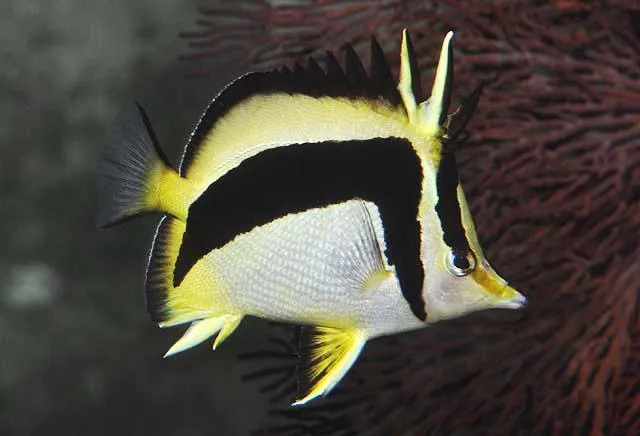
Southern Scythe Butterflyfish (Prognathodes carlhubbsi)
- Max. Length
- 12.1 centimeters
- Length at 1st Maturity
- 8.3 centimeters
- Depth Range
- 1 – 35 meters (3 – 115 feet)
- Frequency
- Abundant in the reefs of the Indo-Pacific Ocean
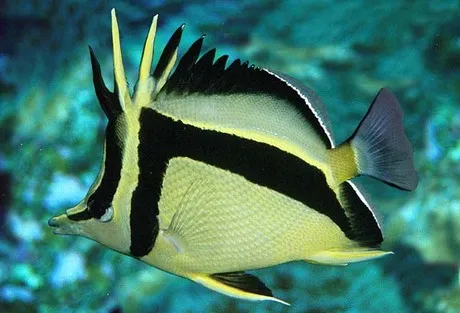
The body patterns of a true butterfly may exhibit the shape of an animal or any object. In the case of a southern scythe butterflyfish, its unique and easily identifiable body pattern resembles like a farmers tool.
They have a prominent black markings that looks like a farmer’s scythe that is deeply embedded in its strongly compressed body. A southern scythe butterflyfish is generally colored yellow and most of its dorsal fins are erected, even if they are not threatened. Aside from corals, they may also take refuge in sea fans and other marine life, or even solid structures, that branches out providing an under shade.
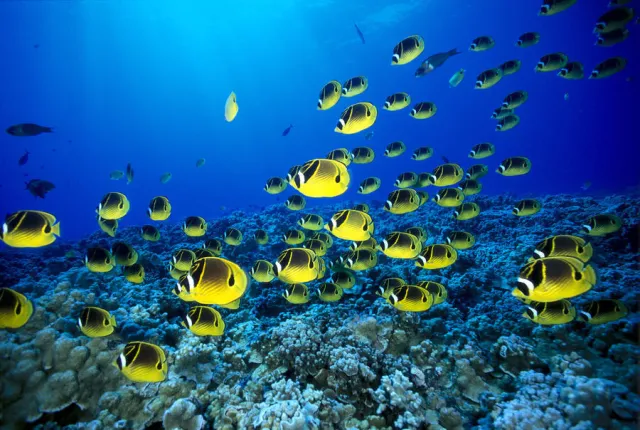
Raccoon Butterflyfish (Chaetodon lunula)
- Max. Length
- 20 centimeters
- Length at 1st Maturity
- 12.9 centimeters
- Depth Range
- 1 – 150 meters (3 – 450 feet)
- Frequency
- Abundant in the reefs of the Indo-Pacific Ocean
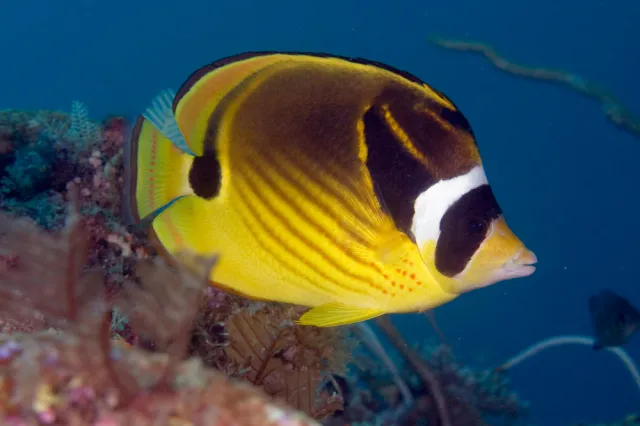
A raccoon butterflyfish is a unique species in the Chaetodontidae family in several ways. As to body appearance, you can never miss noticing the black and white horizontal band in its forehead which looks like a raccoon, thus its name. Another unique characteristic of a raccoon butterflyfish is the way they socialize. While most butterflyfish can be found solitary or in pair, raccoon butterflyfish prefers to converge in a loosely aggregated school. In Cocos island, you can find them in groups of 30 to 50 individuals swimming together in one direction, which is pretty similar on how raccoons walk on land.
But what is really unique with raccoon butterflyfish is that you are most likely to find them during a night dive. This is due to the fact that they are one of the few butterflyfish species that are classified as nocturnal where they prefer to hung-out at night and take refuge during daytime.
Threebanded Butterflyfish (Chaetodon humeralis)
- Max. Length
- 25.4 centimeters
- Length at 1st Maturity
- 16 centimeters
- Depth Range
- 3 – 50 meters (10 – 150 feet)
- Frequency
- Abundant in the reefs of the Eastern Pacific Ocean
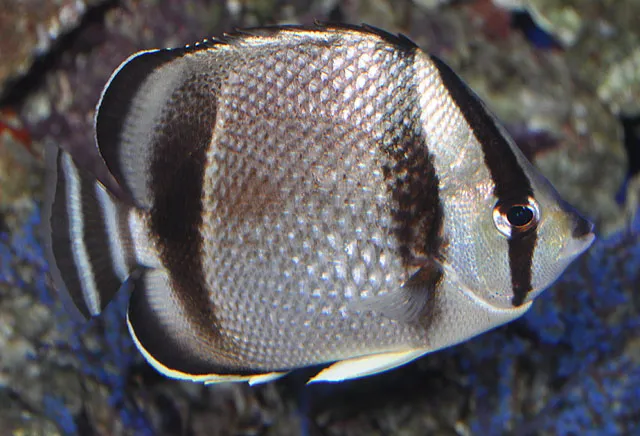
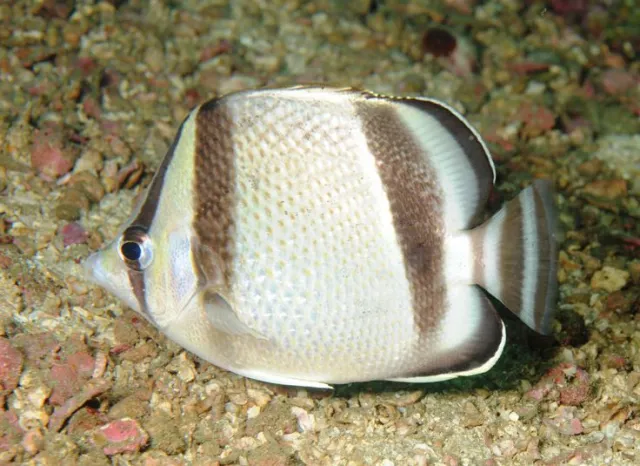
While most of the species in the Family Chaetodontidae are brightly colored, a threebanded butterflyfish is one of its the dull-colored members. Instead of having the usual rainbow colors, the deep and compressed body of a threebanded butterflyfish is only colored silver-white where this dull coloration has visibly exposed its large scales.
Their name was derived from the three black-colored bands that starts from the eyes up to the base of its tail. Similar to all butterflyfish, a threebanded butterflyfish has a pronounced snout with a dental system that are relatively small. During your underwater adventures in Cocos island, you can usually see them in pairs where they thrive the rocky edges of the reef.
A Butterflyfish with a Special Role in Cocos Island
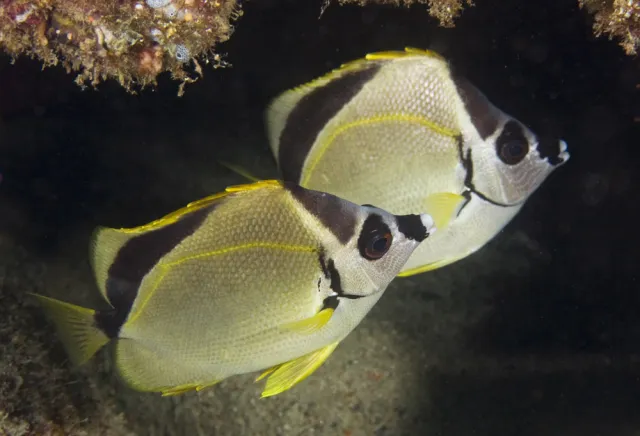
While they put radiance and color to the reef, there is one species of butterflyfish that has a special role other than vibrancy.
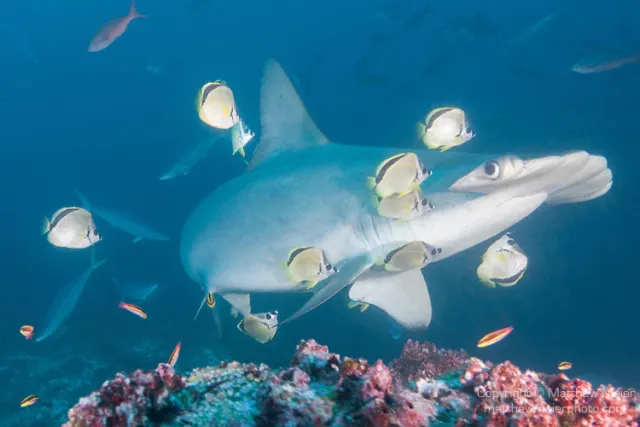
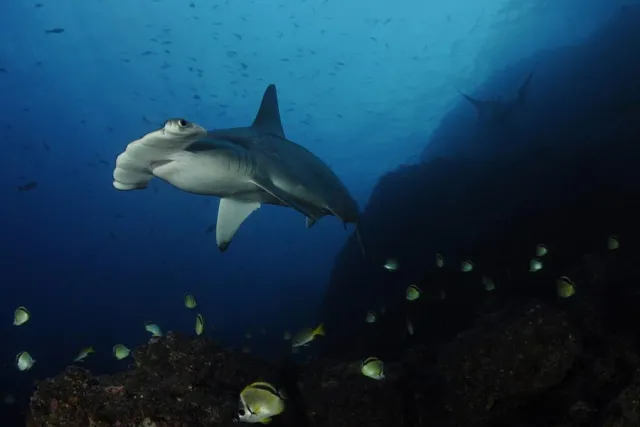
Among the species of butterflyfish in Cocos island, there is one that goes to work and makes a car wash station functional. We are talking about the barberfish (Johnrandallia nigrirostris) which primarily man that operation of a cleaning station. Their number one customer are the hammerhead sharks. On a typical day, you can see a barberfish hovering the reefs of a cleaning station. But as hammerhead sharks comes in, barberfish goes to work by cleaning the big boys of the deep from parasites and dead skin cells in return for a free protein and calcium-rich meal.
For more information, you can read our related article about barberfish.
Book or inquire
Reference
Fishbase: www.fishbase.org
Costa Rica – Scuba: www.costarica-scuba.com
The IUCN Red List of Threatened Species: www.iucnredlist.org
Video courtesy from ianskip