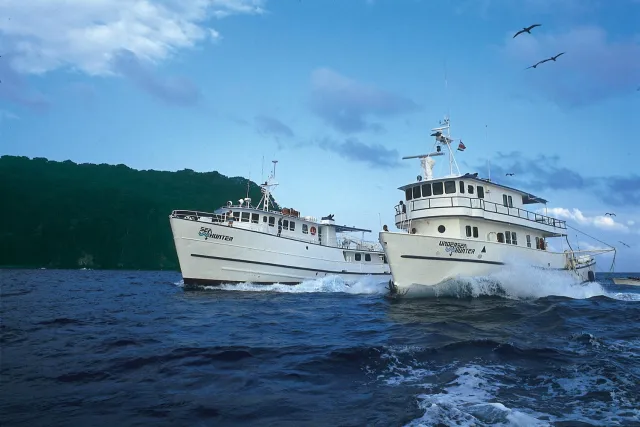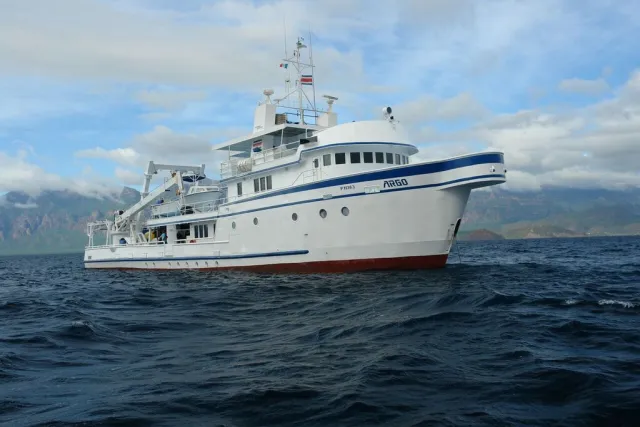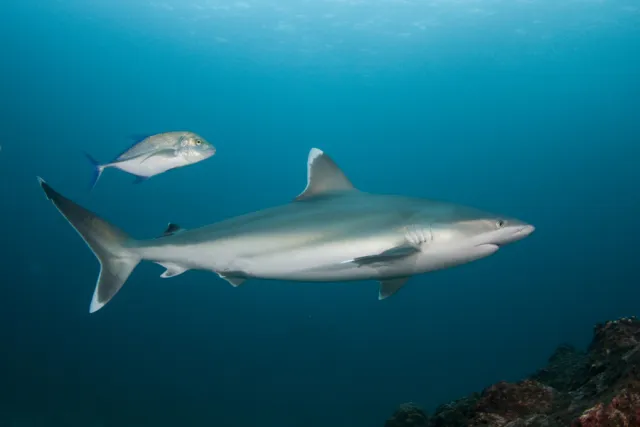
The shores of Costa Rica is known for big fish and complex marine ecosystem where the immensity of this resource is scattered in 1,290 kilometers (800 miles) of coastline. Discovering the underwater beauty of Costa Rica takes you to explore over a hundred dive sites spread over 2 bodies of water (Pacific Ocean and the Caribbean Sea) where each site offers a unique underwater experience. But if you wish to compress all these natural bounty and interact with all the marine resources of Costa Rica in just a single and small site, then you need to travel 550 kilometers (340 miles) out to the sea southwest of mainland Costa Rica arriving at a nature haven called Cocos Island.
Non-Stop Action: Left and Right
As compared to other dive sites in Costa Rica where you need to swim out or cruise along to reach a certain site to observe and interact with marine life, your underwater action in Cocos Island starts the moment you enter the water. The possibility of seeing large sea creature, like manta rays or schooling bigeye trevally, during the start of your descent is relatively high.
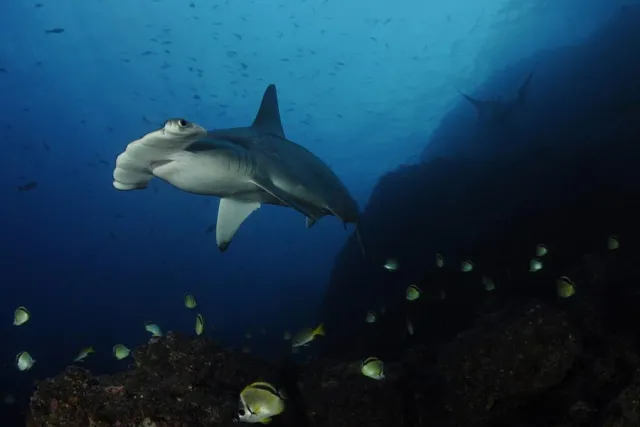
And it doesn’t stop there. The deeper you go, the more you will see big fish. For instance, when you reach 60 feet (20 meters), you will usually arrive at a cleaning station where hammerhead sharks are being cleaned from parasites courtesy from the diligent work of the barberfish. The reef floor also offers its own unique experience where deep sea creatures like the rosy-lipped batfish and the highly feared tiger shark often gives you a surprising experience.
Top Diving Sites in Cocos Island
Bajo Alcyone

Located on the eastern side of Cocos island, Bajo Alcyone is a seamount that allows you to combine both wall, deep and drift diving over mild to moderate current. This vertical ecosystem is interspersed with cleaning station where hammerhead sharks often perform their so called swim-by dance. This swarm of hammerhead sharks will keep your sight busy as their presence will come from every direction.
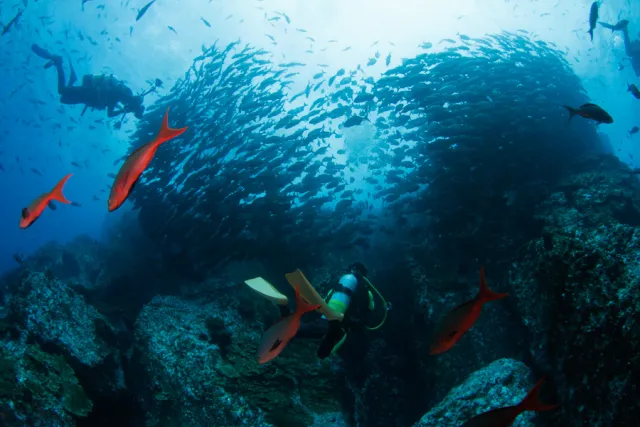
When environmental factors are considerable, your dive guide will lead you to the open water environment as you start your ascent. This deep pathway that will lead you the surface will give you this once in a lifetime opportunity to see one of the world’s healthiest and thickest population of bigeye trevally that usually comes in a tornado formation.
For more information, you can read our related article about Bajo Alcyone.
Manuelita
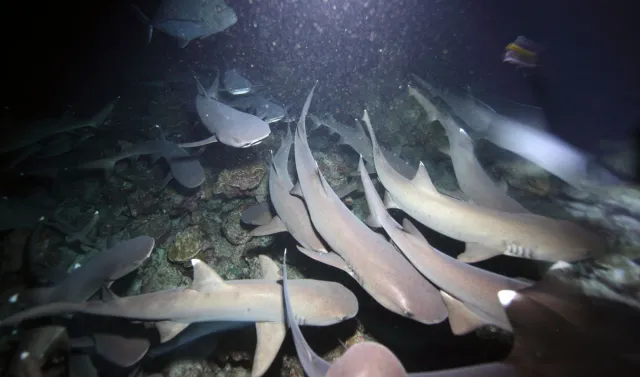
If peace and tranquility are the words best to describe the inland part of Cocos island, then it is a different thing when you go down under especially in this busy reef located on the northern coast. Comparable to the dynamics of New York City, Manuelita is one of the reefs that never sleeps and the action continues even when the sun has already settled down in the dark. And if we speak of New York Residents, whitetip reef sharks are its counterpart here in Manuelita.
During the day, whitetip reef sharks are not as active where you can see them lying on the sand or occasionally swimming through. But when the sun sets, they become highly active in search for food which can be compared to a New Yorker searching for a nice restaurant to eat. This is turn gives you this rare opportunity to go night diving with whitetip reef sharks which has become one of the famous dives in Cocos island.
For more information, you can read our related article about Manuelita.
Dos Amigos
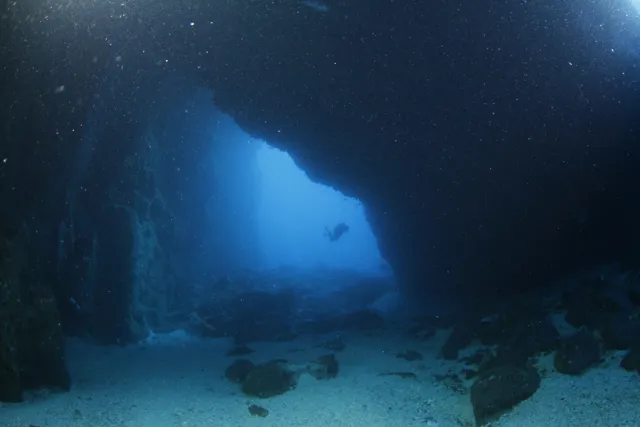
This is one of the sites in Cocos Island where the flow of current is a major factor in the general direction of your dive that leads to a specific dive site. In general, Dos Amigos is composed of 2 rocky protrusions, namely: Dos Amigos Grande and Dos Amigos Pequena, that has a white sandy channel in between which is often the starting point of your dive. This means that the direction of the current will either lead you to one of the rocky protrusion. Aside from the reef-associated fish that thrives, what you will really appreciate is the large underwater tunnel where you can swim-through or hover in between and pose for a nice picture.
For more information, you can read our related article about Dos Amigos.
Reference
Dive Zone: www.divezone.net
Dive the World: www.dive-the-world.com
Undersea Hunter Group: www.underseahunter.com
Video courtesy from Jean-Marc Thimon