While the intense action in Cocos Island is known to occur in the deeper portions of its reef, there is another famous dive that occurs in a relatively shallow depth – the Bait Ball.
Dive Profile
- Type of Diving
- Liveaboard and Shallow Water Diving
- Maximum Depth
- 6 meters (20 feet)
- Average Depth
- 3 meters (10 feet)
- Visibility
- 10 – 20 meters (30 – 60 feet)
- Water Temperature
- 73 – 75 OF (22 – 24 OC)
The Usual Dive Plan
A Bait Ball occurs when schools of bait fish like sardines are being pursued and hunted where they shift from migration mode to protective mode and form a tightly packed round congregation where it looks like a spinning silver ball. Sometimes a bait ball can consist of two or more species of bait fish where this protective maneuver is believed to be their last defense before predators will start feasting on them.
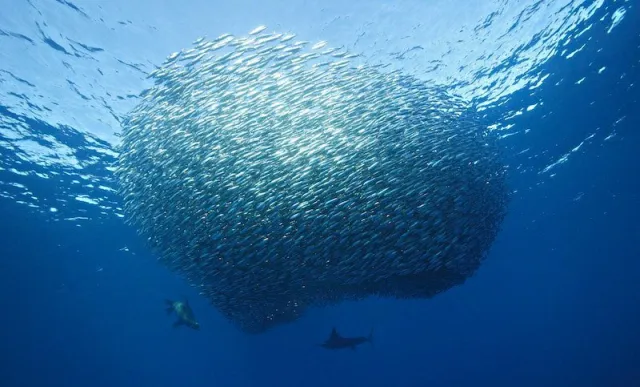
Unlike other famous dives in Cocos Island taking place in a particular reef, the bait ball has no permanent address. As long as there is a huge congregation of bait fish being pursued by a predator, then the possibility of having a bait ball is huge. With this, experiencing this famous dive is dependent on the occurrence of a bait ball.
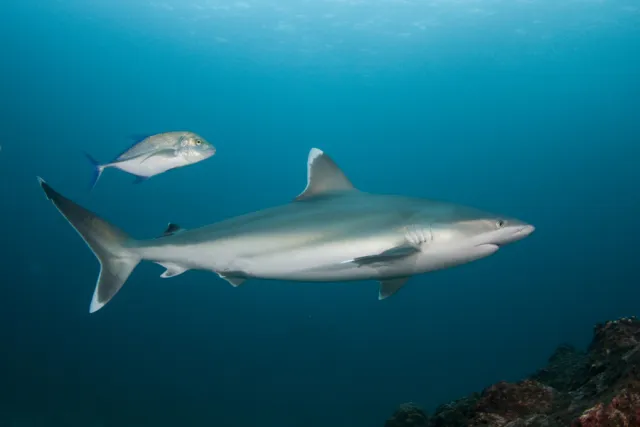
But for seasoned dive guides, there is a spot southeast of Bajo Alcyone where bait balls are easily formed. Once a bait ball is spotted you will enter the water in a distance and slow come close to the pack. Once you are near enough, you will see that several predators like tunas, dolphins and sharks are preparing for a big feast. Their preparation is not by saying a Prayer Before Meals but circles around the bait ball making it more compact and away from the reef where bait fish can no longer hide.
Kidding aside, a coordinated feast (or should we say “attack”) is made once the Prayer before meals is being offered. From this moment, you will see that sharks, tunas and dolphins will come from every direction consuming any bait fish that comes in their way. This commotion underwater will produce surface agitation which will further attract seabirds who will eventually join in.
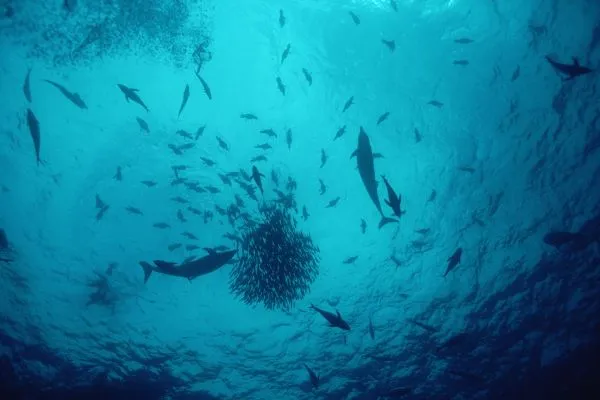
This underwater feast will be over in a matter of minutes where you will observe that the bait ball is reduced from a tightly packed school to a loose congregation of surviving fish. After which, you can call it a day and ascend back to your skiff boat where you can start reviewing your pictures and videos or filling up your dive log. At the end of the day, if there was one description that perfectly fits this intense shallow
Reference
Undersea Hunter Group: www.underseahunter.com
Live Leak: www.liveleak.com
Scuba Board: www.scubaboard.com
Video courtesy from Jon Barcellona